
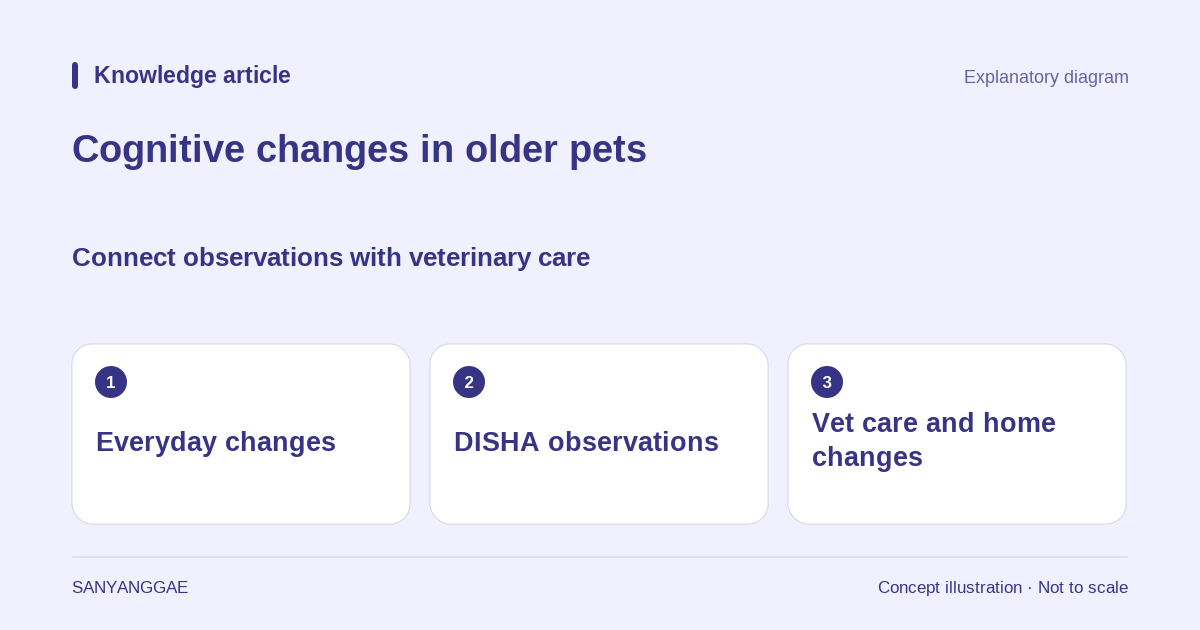
An older pet pacing at night or stopping in front of a familiar door may bring cognitive changes to mind. Yet pain, reduced vision or hearing and other illnesses can produce the same behaviour. Dismissing everything as inevitable ageing and calling every change dementia can both delay necessary assessment. Use observations to tell the veterinary team which everyday abilities have changed, rather than as a test for assigning a diagnosis at home.
1. Connect cognitive changes with everyday functioning
Cognitive dysfunction involves changes in abilities such as learning, memory and responding to the surroundings, expressed through everyday behaviour. What a carer first sees is not brain pathology itself but changes in sleep, movement and interaction. Record when and in what situations things changed before concluding that dementia has begun. Evidence and assessment experience are not identical for dogs and cats, so do not directly apply another species' case.
Looking at function makes the significance easier to explain. Less interest in a toy and being unable to find the water bowl and drink can both count as activity changes, but their effects on daily life differ. Within the animal's physical abilities, check access to food, water, toileting and rest. Focus on how comfortably it can continue the behaviours it needs now, rather than judging it only by tasks it could perform when young.
2. Use DISHA to organise questions without missing areas
DISHA is a framework for considering changes in disorientation, social interaction, sleep and wakefulness, house-soiling or toileting habits, and activity. Wording varies slightly between tools, and anxiety may be considered separately. Ticking several items does not establish a diagnosis or stage at home. Use it as a checklist for covering all relevant areas when speaking with the veterinarian.
For orientation, note stopping in corners or waiting on the wrong side of a familiar doorway; for interaction, changes in seeking family members or avoiding contact. Separate time awake at night from daytime rest rather than simply saying sleep increased, and record toileting locations and access conditions together. Activity includes aimless pacing and participation in previously enjoyed activities, not just distance walked. If an entire day is difficult to document, begin with a specific description of the most noticeable event.
3. Consider pain, sensory changes and other illnesses together
Joint pain may make changing position at night difficult or lead to avoiding stairs, while reduced hearing can explain a lack of response to calling. Illnesses that increase thirst or urine output can affect night waking and toileting accidents. Night-time calling in cats is not explained by cognition alone either. This is why history, examination and appropriate tests assess other causes alongside cognitive changes. Being old does not rule these possibilities out.
Sudden confusion, collapse or neurological changes such as seizures need prompt veterinary attention and should be distinguished from gradually changing habits. Instead of only saying that things worsened recently, explain whether a behaviour possible yesterday is impossible today or has changed slowly over months. Record existing medicines, supplements and recent prescription changes. Because stress in the clinic can alter behaviour, short everyday videos can help, provided the animal was not woken or prompted for filming.
4. Make navigation and access to toileting easier
Find obstacles along familiar routes rather than redesigning the whole home. Keep routes to food, water, bedding and toileting simple, and reduce slippery flooring, trapping gaps, stairs and fall risks. Consider consistent lighting when the animal hesitates in darkness, and check furniture gaps where turning is difficult. Environmental change itself may increase confusion, so avoid moving many things at once.
Cats may need easy-entry litter boxes and routes without long detours. For dogs, check whether toileting opportunities match actual mobility. For example, strict house-training from the beginning will not solve a current functional problem in a dog that cannot wait by the door and has accidents. Improve the location and frequency of opportunities, and do not punish mistakes. Safety adjustments support daily comfort and reduce accidents; they are not a cure.
5. Keep easy activities within a predictable rhythm
A similar pattern of meals, rest, manageable movement and brief interaction also helps carers compare the animal's condition. Cognitive stimulation does not mean prolonged difficult puzzles. Choose achievable activities: familiar simple cues, easily found food and comfortable scent exploration. Reduce intensity and duration if fatigue, irritability or avoidance increase, and reconsider possible pain.
Preventing daytime naps or exercising the animal to exhaustion because it wakes at night cannot be assumed helpful. With night-time calling, check toileting, pain, discomfort and surrounding stimuli rather than scolding. If family members take turns, share who did what and when to avoid a different response each time. The carer's sleep and care burden are important information to discuss at the appointment too. An unsustainable plan also makes consistent observation harder.
6. Decide how to reassess after the appointment
Medicines, diets and supplements are considered individually with the veterinarian. Do not accept claims that a particular oil or supplement reverses every cognitive disorder, or apply a dog study's product and method directly to a cat. If something is prescribed, clarify the target behaviour, expected observation period and how to contact the clinic about adverse effects. Adding several products together makes their effects harder to distinguish.
Follow-up records should include not only night-waking frequency but time taken to settle again, access to food and toileting, and continued comfortable interaction. Less night-time calling accompanied by excessive daytime lethargy and refusal of food is not simply success. Show specific good and difficult days, assessing comfort and safety together. Suspected cognitive change calls for adapting a plan that supports current daily life without missing other problems, rather than rushing to attach one label.