
Soybean
Soybean is a legume crop harvested for the seeds inside its pods. Comparing the cotyledons of a seedling with later leaves of three leaflets reveals how the plant develops.
- Scientific name
- Glycine max (L.) Merr.
- Family
- Pea family · Fabaceae
- Other names
- Glycine max
- Reviewed
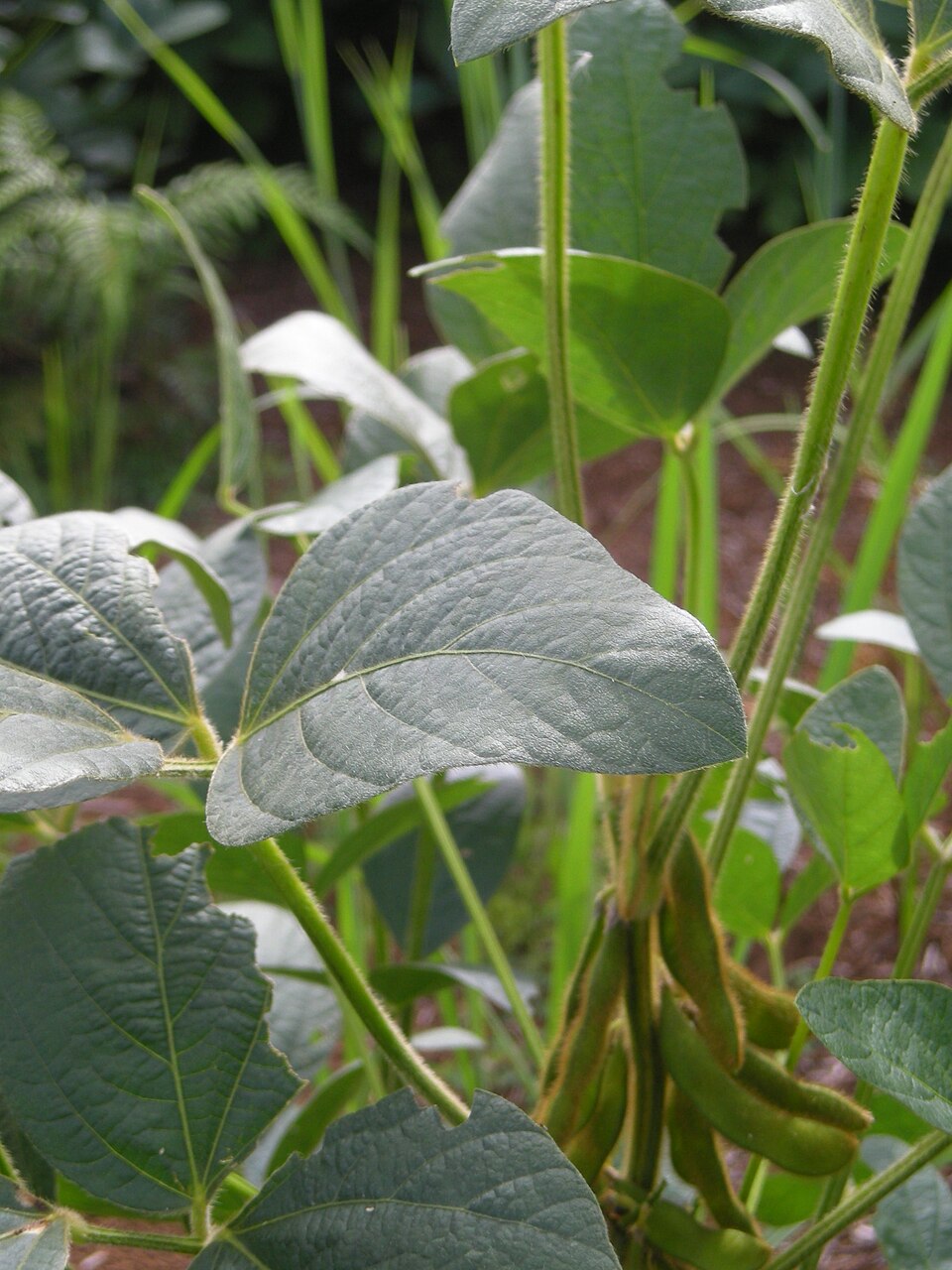
The photograph shows soybean leaves, stems and developing green pods. Root nodules and the seeds inside the pods are not visible.
Glycine max pod green1 Carol Rose
Photo credit: Harry Rose from South West Rocks, Australia
References: https://www.flickr.com/photos/macleaygrassman/10220460885/
License: CC BY 2.0
A Wikimedia-provided reduced JPEG is used; no local resizing, cropping, colour changes or format conversion was performed.
Names and classification
Soybean, Glycine max, belongs to Fabaceae. This entry covers cultivated soybeans grown as an annual crop, keeping the cultivated form treated as Glycine max subsp. max separate from wild relatives.
Observable features
Stems and pods are hairy, and mature leaves usually have three leaflets. Small flowers are followed by pods; the beans we collect are the seeds inside them.
Distribution and habitat
Long cultivated in East Asia, soybean is now grown in fields in many regions. It needs sunlight and well-drained soil, with cultivar maturity matched to the local warm season.
Ecology and life cycle
The cotyledons emerge above the soil, followed by the first simple leaves and then leaves with three leaflets. Symbiotic microbes in root nodules help fix nitrogen, with the amount depending on soil and symbiotic conditions.
Cultivation and care
Sow a locally suitable cultivar after late-frost risk has passed and the soil has warmed. Watch moisture during flowering and pod development, checking soil and plant condition rather than following a fixed calendar.
Observation and use precautions
Keep chemically treated sowing seed separate from food soybeans and follow the package label. Obtain the grower’s permission to observe or harvest a crop, and never infer that similar wild legumes are edible from a photograph.