
Reptiles and prehistoric animals
Explore living turtles, snakes and lizards alongside animals known from fossils. The prehistoric entries include dinosaurs, pterosaurs and synapsids from the mammalian lineage.
Browse categories
Dinosaurs and other prehistoric animals
Compare the skeletons of Tyrannosaurus, the pterosaur Pteranodon and the synapsid Dimetrodon. See how fossils reveal the ways these groups lived.
Reptiles
Explore classification, origins, appearance, behavior, observation and care through the published animal profiles for reptiles.
Published animal profiles
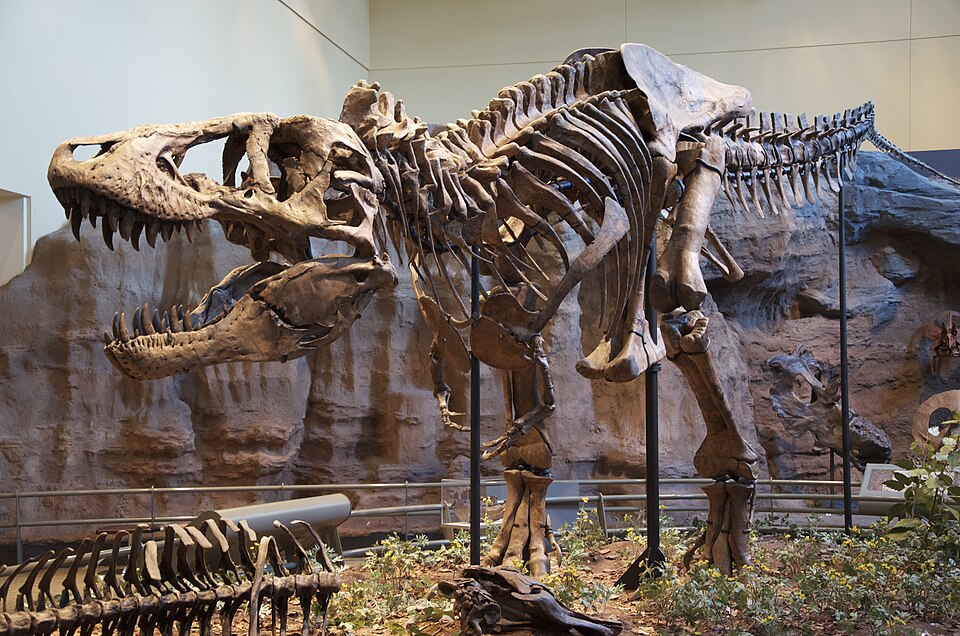
Tyrannosaurus
Reading Tyrannosaurus’s huge jaws and bipedal movement from fossils. Tyrannosaurus rex was a tyrannosaurid theropod living in North America near the end of the Late Cretaceous. Known through bones and teeth from Canada and the United States, it lived at a different time from Jurassic Allosaurus.
Read the guide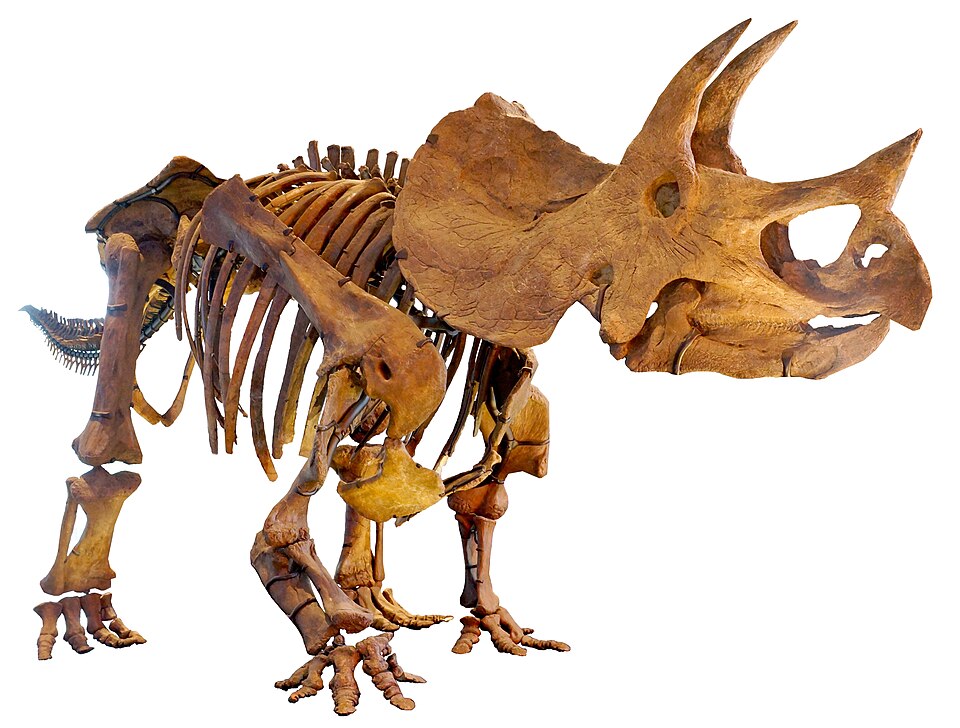
Triceratops
A latest-Cretaceous ceratopsian with three horns and a broad frill. Triceratops was a ceratopsian dinosaur living in Late Cretaceous North America. Its name refers to a three-horned face, taken from the long horns above the eyes and the horn above the nose.
Read the guide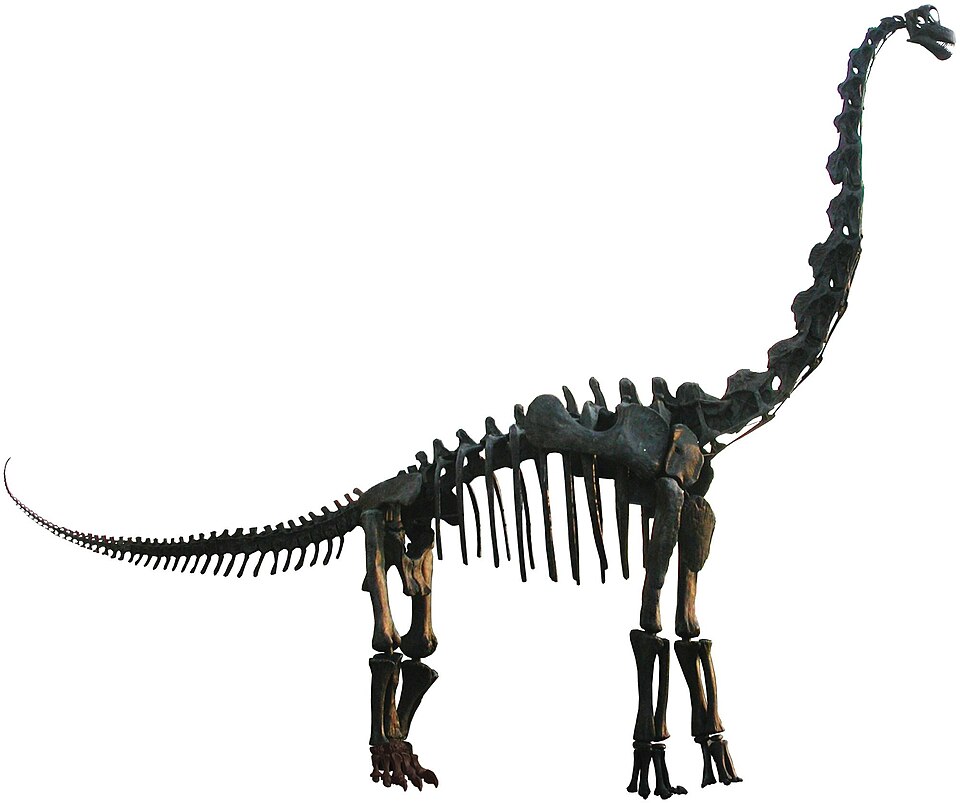
Brachiosaurus
A sauropod distinguished by long forelimbs and high shoulders. Brachiosaurus was a sauropod dinosaur living in Late Jurassic North America. This page focuses on the North American Brachiosaurus altithorax.
Read the guide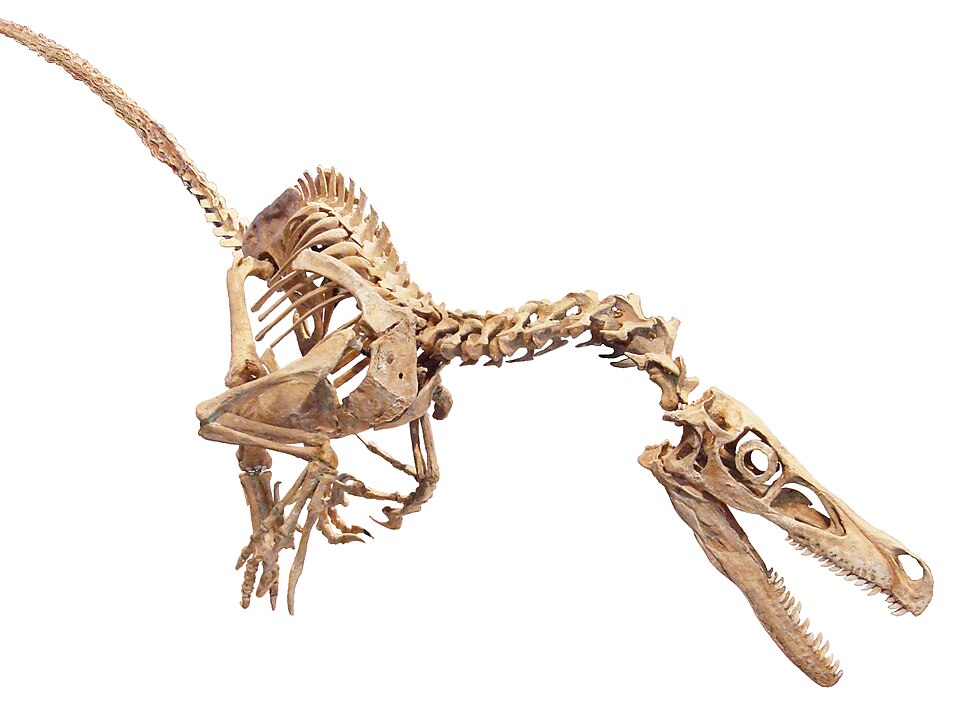
Velociraptor
A small feathered dinosaur whose actual skeleton differs from its film image. Velociraptor was a dromaeosaurid theropod of Late Cretaceous East Asia; Mongolian fossils are important research material, and this page focuses on Velociraptor mongoliensis.
Read the guide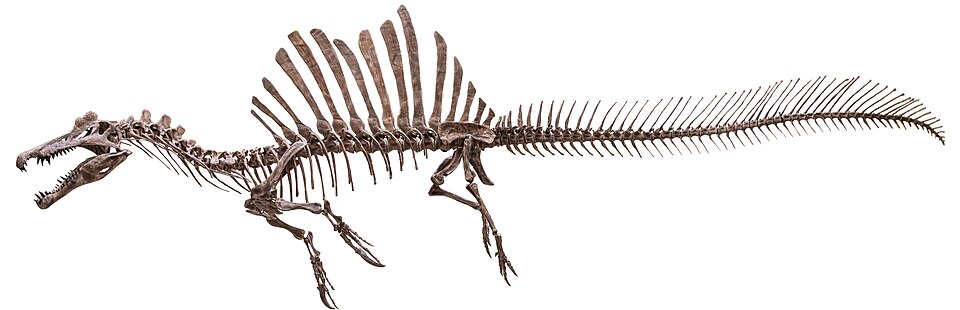
Spinosaurus
A theropod with a long snout and tall back spines, studied for life near water. Spinosaurus was a large North African theropod of the Cretaceous, investigated through fossils from Egypt, Morocco and elsewhere; this page covers Spinosaurus aegyptiacus.
Read the guide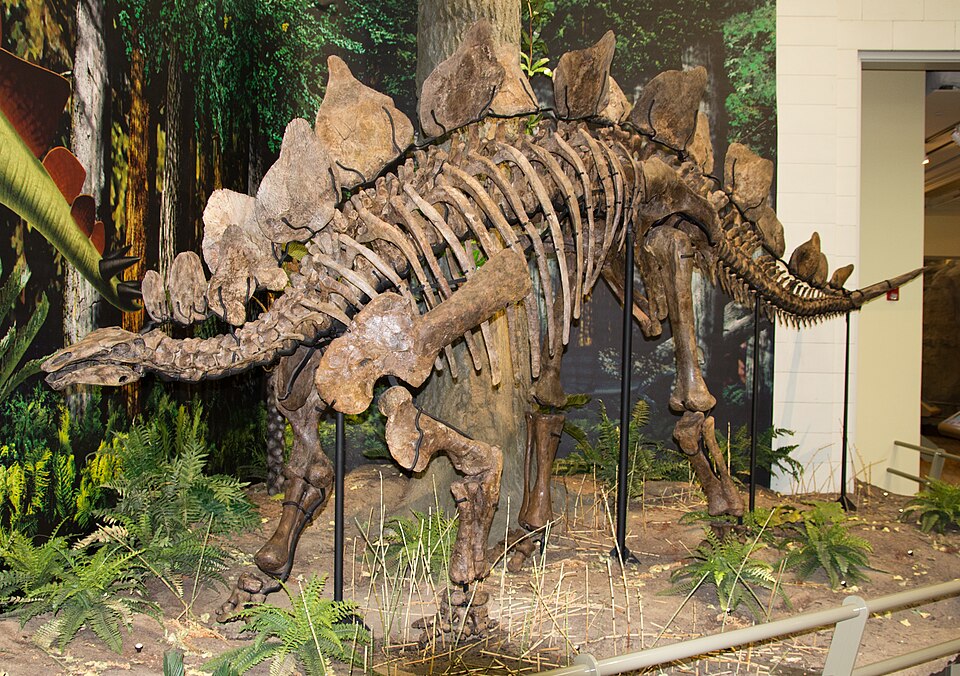
Stegosaurus
A stegosaur whose back plates and tail spikes merit separate attention. Stegosaurus was a stegosaurian dinosaur of the Late Jurassic. A representative herbivore known from North America's Morrison Formation, it did not live at the same time as the latest-Cretaceous Tyrannosaurus.
Read the guide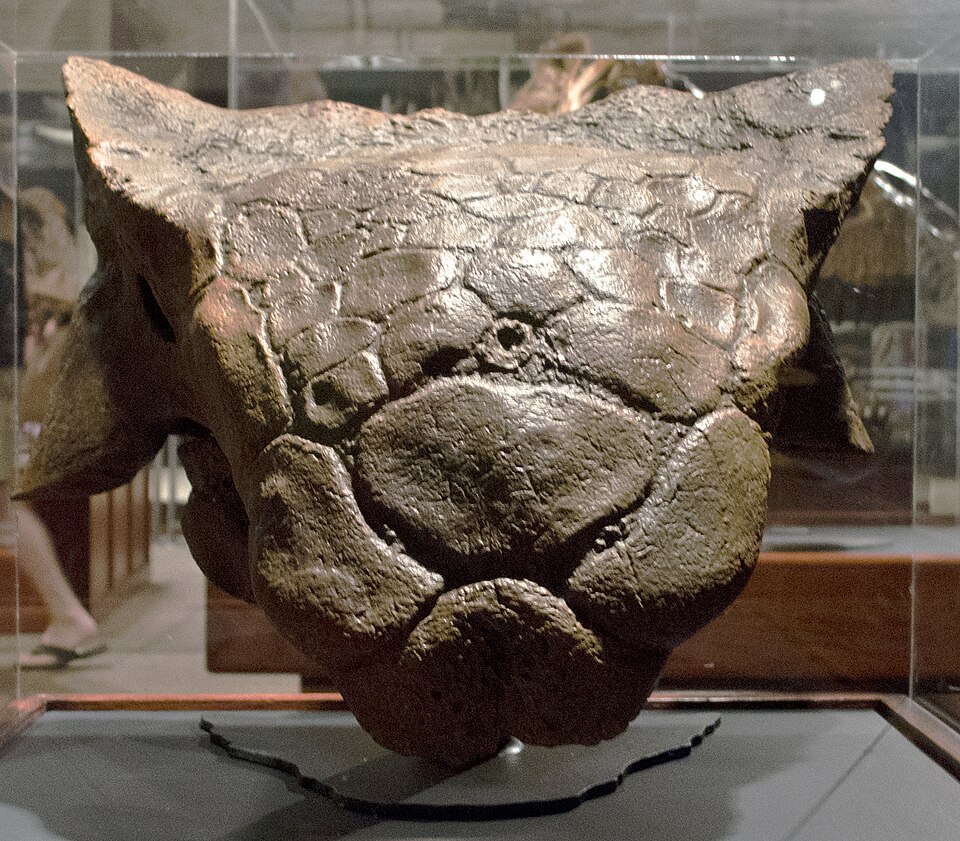
Ankylosaurus
An armoured dinosaur with bony armour and a clubbed tail. Ankylosaurus lived in North America at the end of the Late Cretaceous; despite its familiar name, no fully complete skeleton is known, and reconstruction also compares close relatives.
Read the guide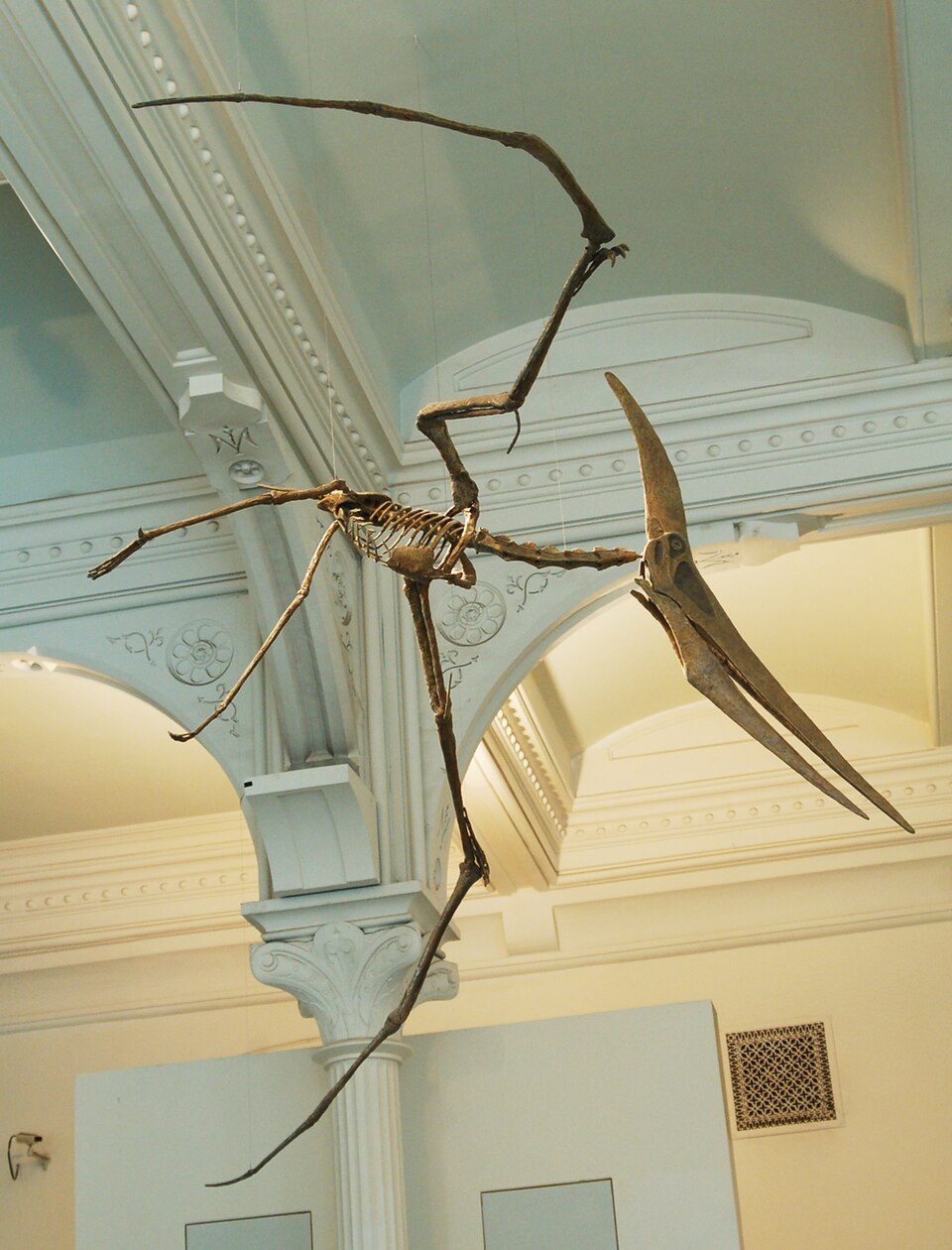
Pteranodon
A coastal pterosaur with a toothless bill and wing membranes. Pteranodon was a pterosaur rather than a dinosaur; distinguish these flying reptiles of the same era from a type of dinosaur.
Read the guide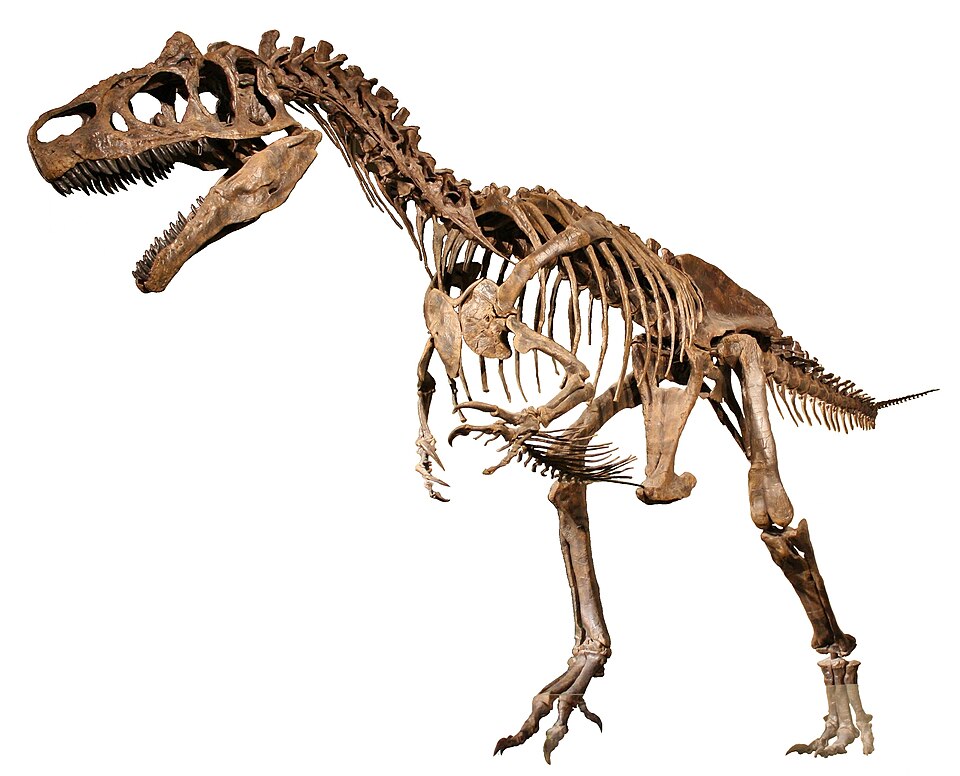
Allosaurus
Reading a Jurassic predator's jaws and three fingers through its skeleton. Allosaurus was a Late Jurassic theropod, a predator from an earlier time than Tyrannosaurus.
Read the guide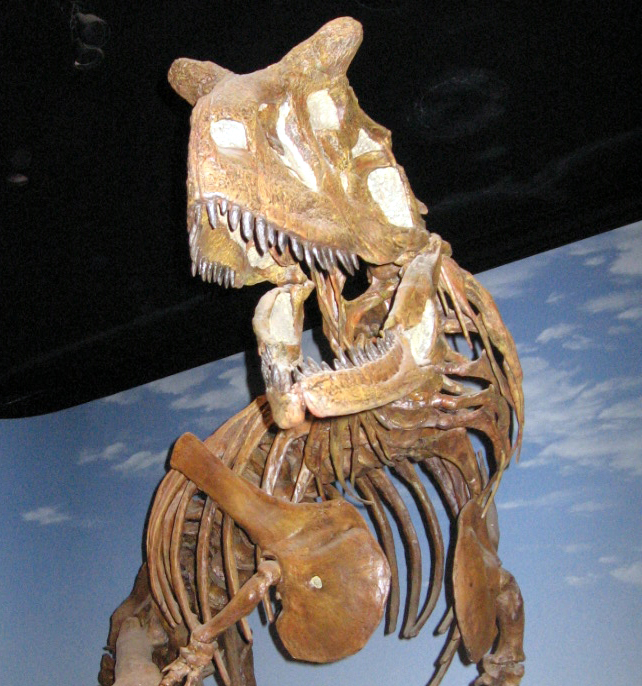
Carnotaurus
A South American theropod with horns above its eyes and preserved skin traces. Carnotaurus was an abelisaurid theropod, rather than a long-necked herbivorous sauropod.
Read the guide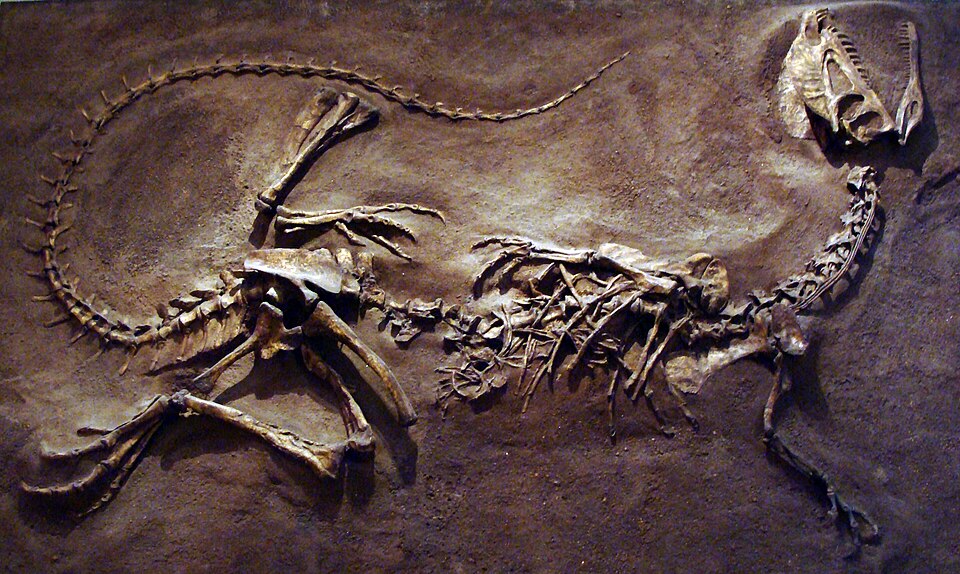
Dilophosaurus
Two crests distinguish an Early Jurassic theropod from fictional film features. Dilophosaurus was named for the crests on its head.
Read the guide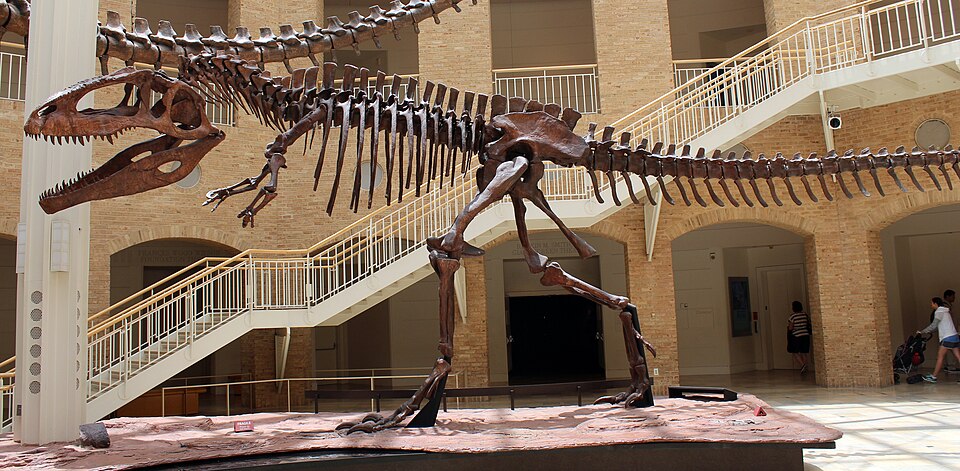
Giganotosaurus
Understanding a predator through specimens and estimation methods before giant-size claims. Giganotosaurus was discovered in Argentina and differs in time and lineage from other similarly sized dinosaurs.
Read the guide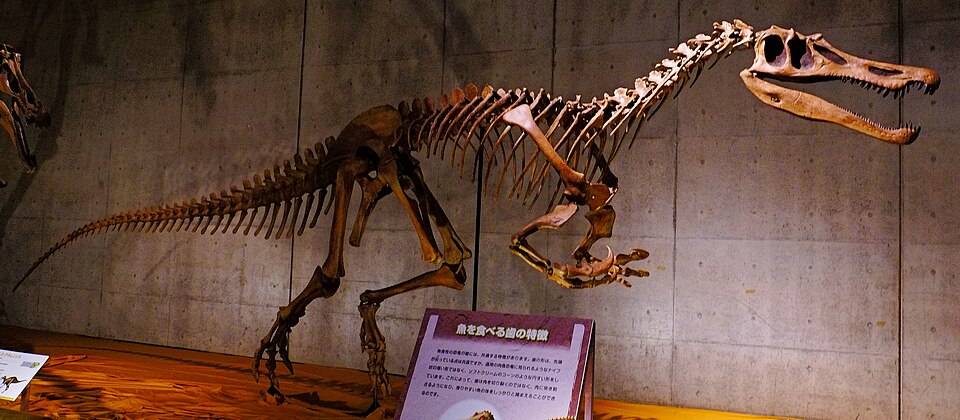
Baryonyx
A theropod with a long snout, large hand claw and preserved food traces. Baryonyx was a spinosaurid; British fossils provide important evidence for its diet and anatomy.
Read the guide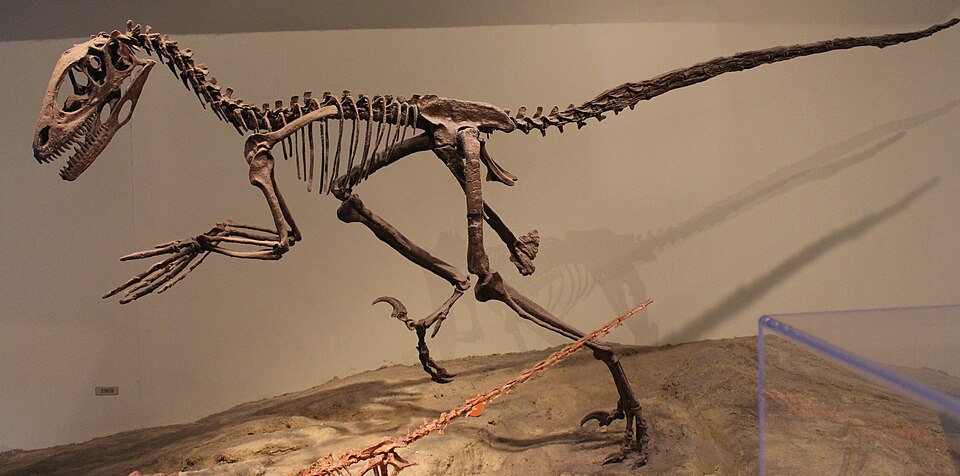
Deinonychus
Understanding a theropod through a large hind claw and balancing tail. Deinonychus was a dromaeosaurid that played an important role in research on dinosaur–bird relationships.
Read the guide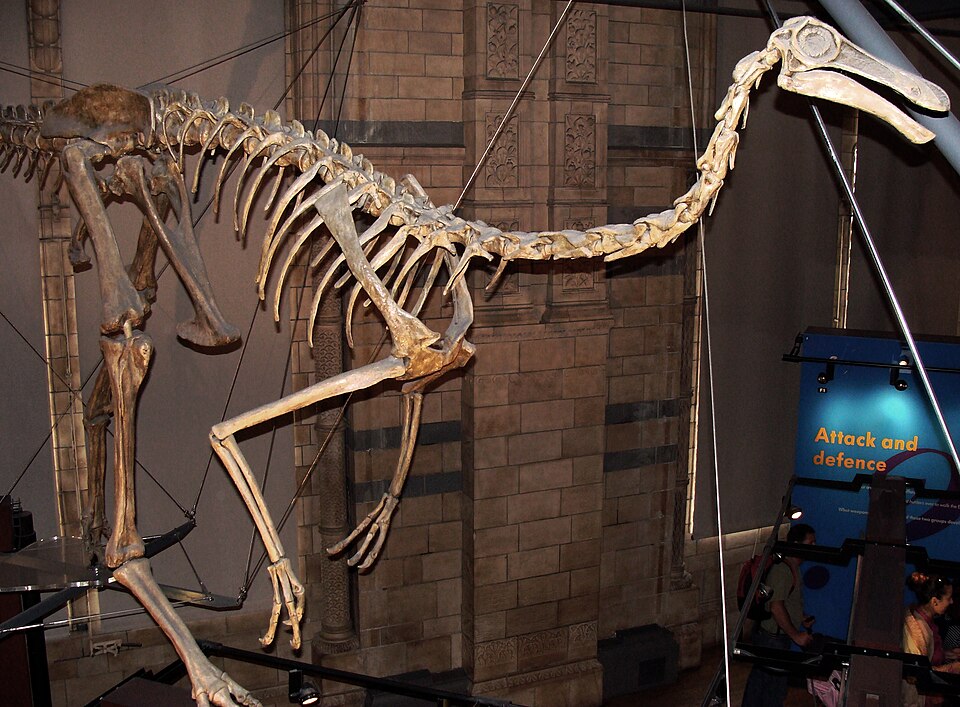
Gallimimus
A Mongolian dinosaur with an ostrich-like outline and toothless bill. Gallimimus was an ornithomimid theropod; the lineage name theropod does not mean every species was carnivorous.
Read the guide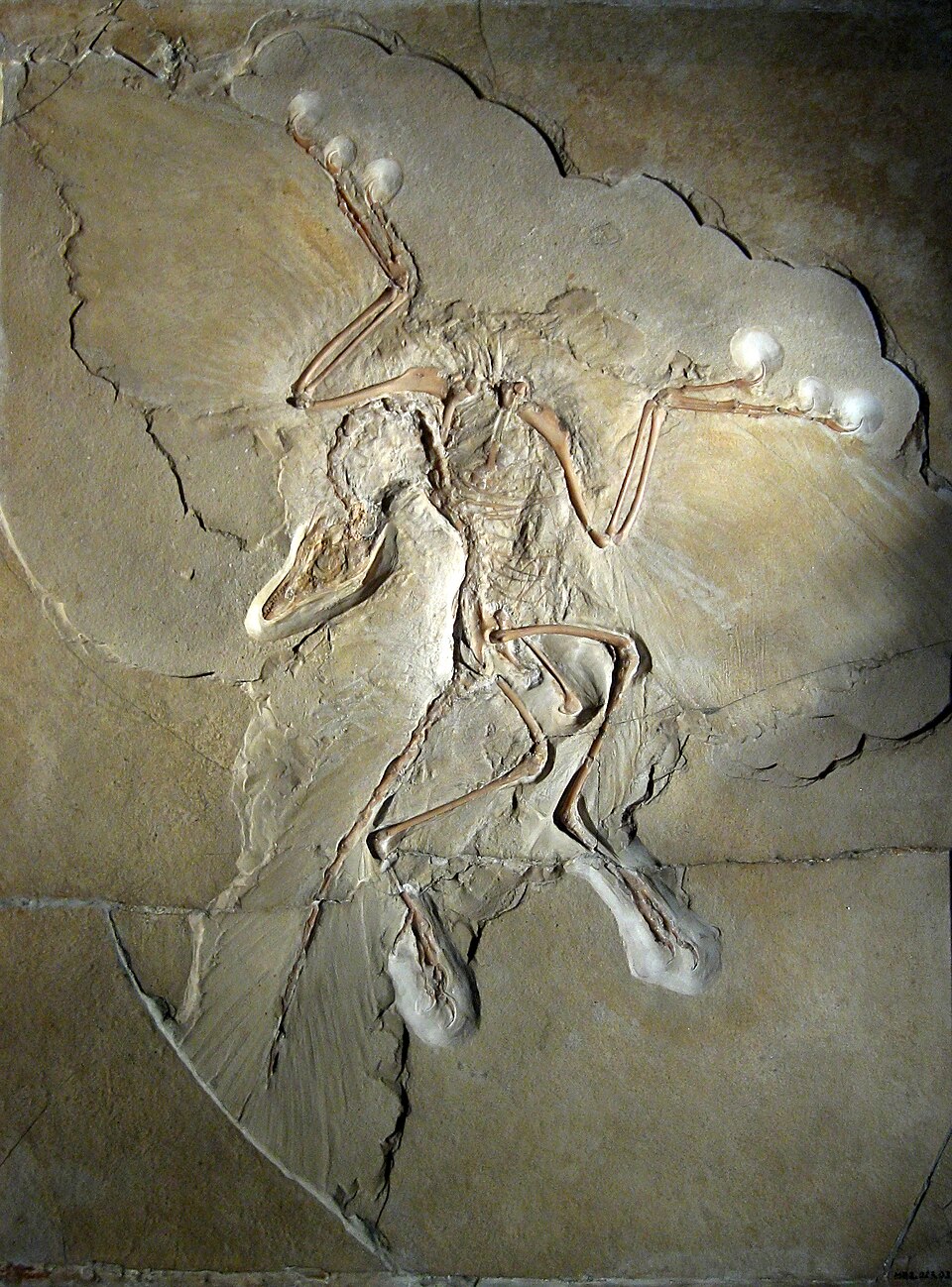
Archaeopteryx
An early bird lineage preserving feathers, teeth and a long bony tail together. Archaeopteryx shows traits of early birds and closely related dinosaur lineages; wings do not place it with pterosaurs.
Read the guide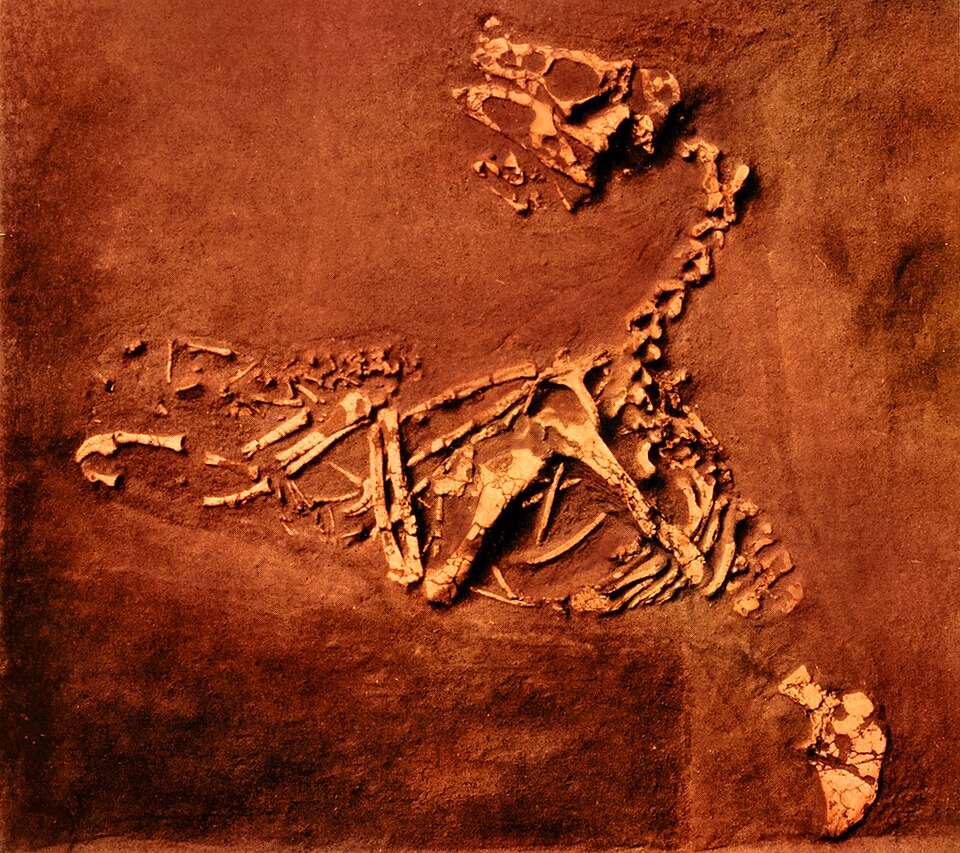
Oviraptor
The name egg thief is separate from the interpretation of nesting fossils. Oviraptor was an oviraptorosaur theropod; its name does not establish egg-stealing behaviour.
Read the guide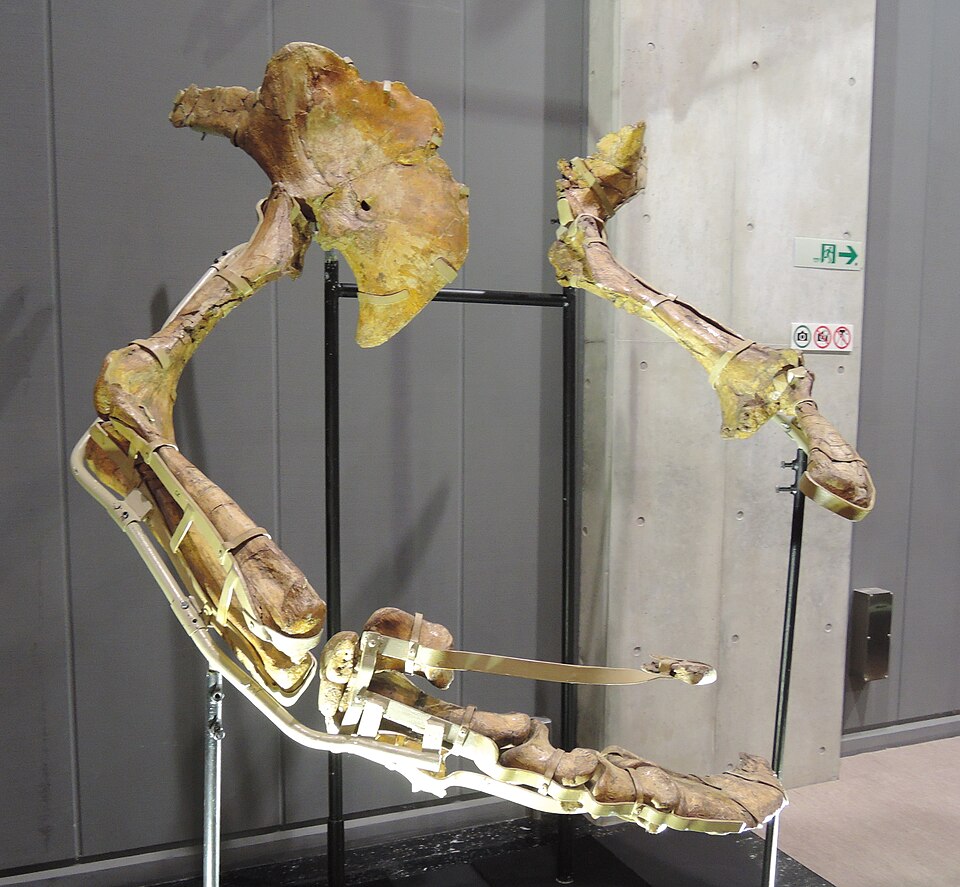
Therizinosaurus
Long claws alone do not establish a carnivorous dinosaur. Therizinosaurus was a theropod in a lineage interpreted as having plant-feeding adaptations; theropod and carnivorous dinosaur are not exact synonyms.
Read the guide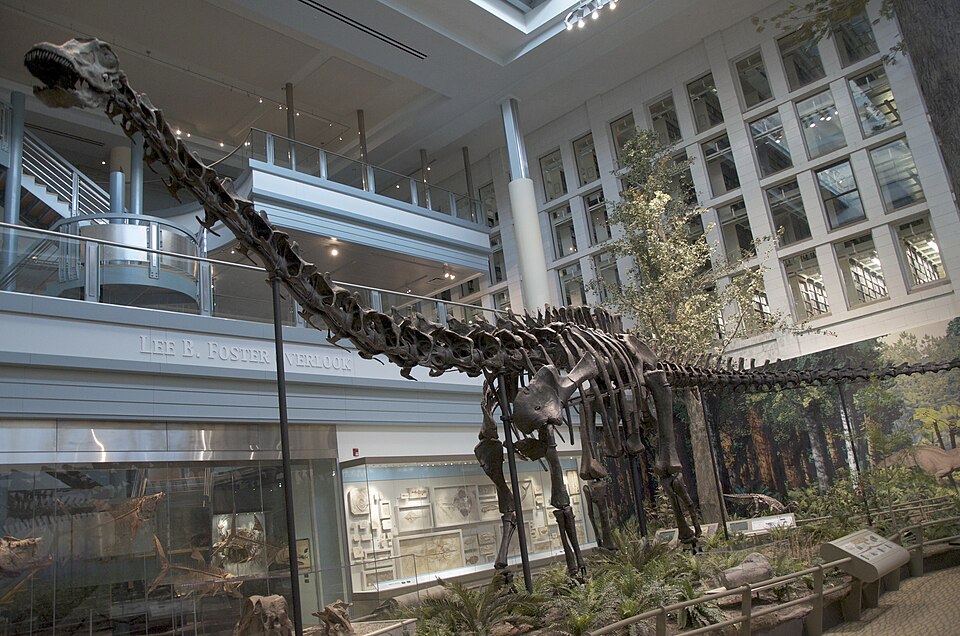
Diplodocus
A sauropod with a long slender neck and tail, and teeth concentrated at the front. Diplodocus is a long-necked sauropod discovered in North American Jurassic sediments.
Read the guide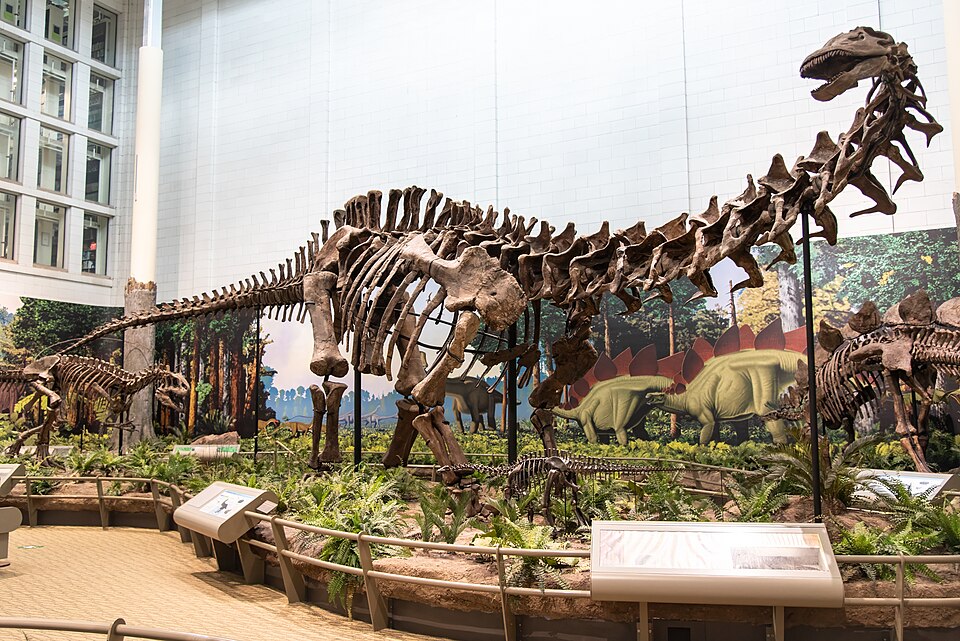
Apatosaurus
A thick neck, large torso and a classification history connected with Brontosaurus. Apatosaurus is a sauropod related to Diplodocus; its naming relationship with Brontosaurus reflects changes in taxonomic research.
Read the guide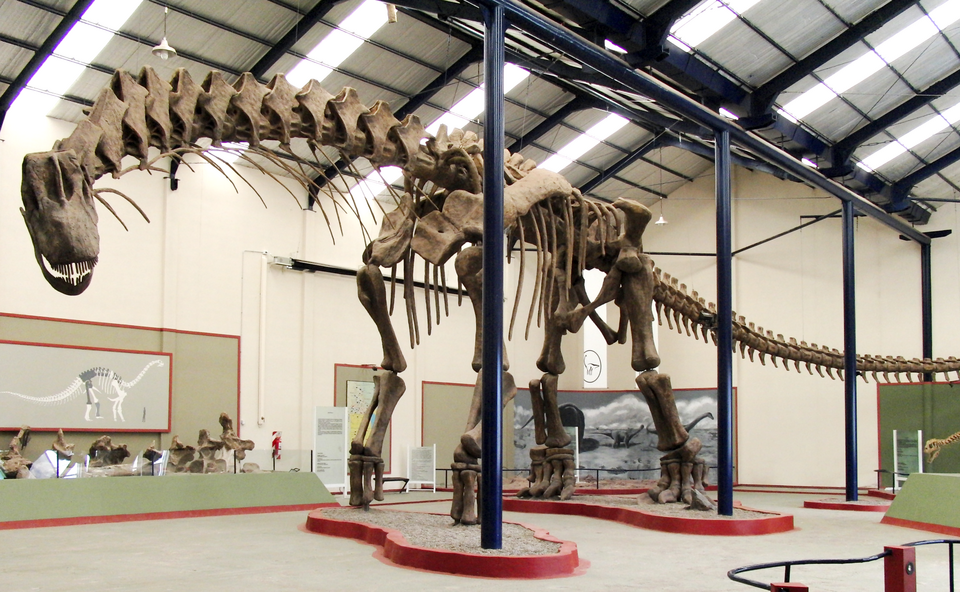
Argentinosaurus
Giant vertebrae reveal immense scale and the limits of estimation. Argentinosaurus is a titanosaurian sauropod discovered in Argentina, known as a very large herbivorous dinosaur.
Read the guide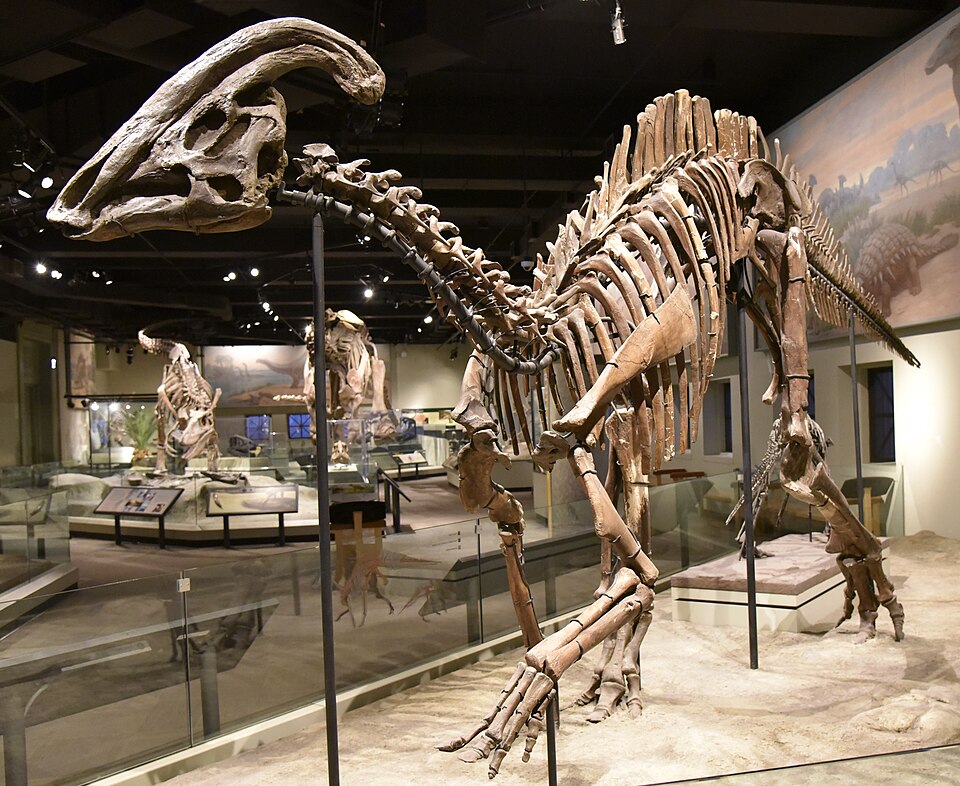
Parasaurolophus
A long hollow crest behind the head and jaws for processing plants. Parasaurolophus was a hadrosaurid ornithischian, a herbivore different from long-necked sauropods.
Read the guide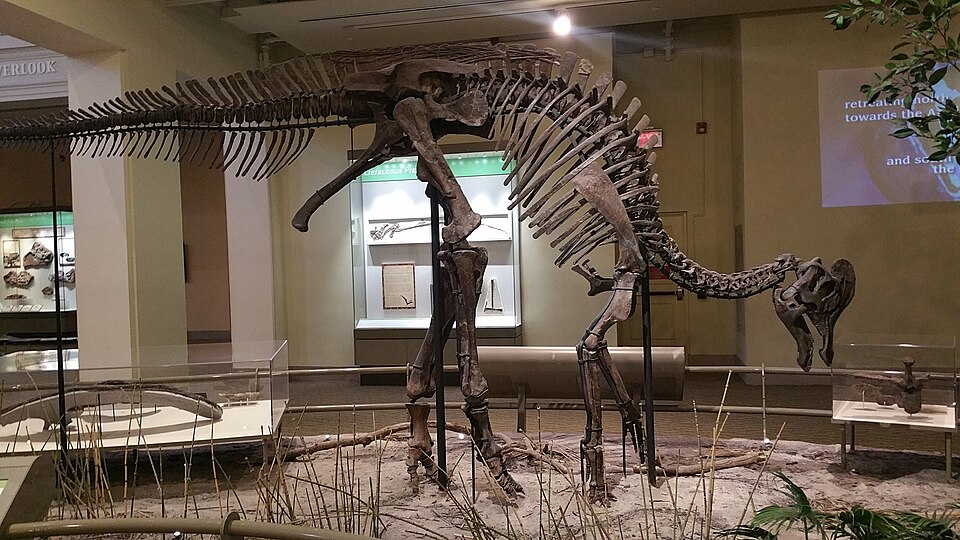
Corythosaurus
Comparing a helmet-like crest with related hadrosaurs. Corythosaurus was a crested hadrosaur interpreted as feeding on plants.
Read the guide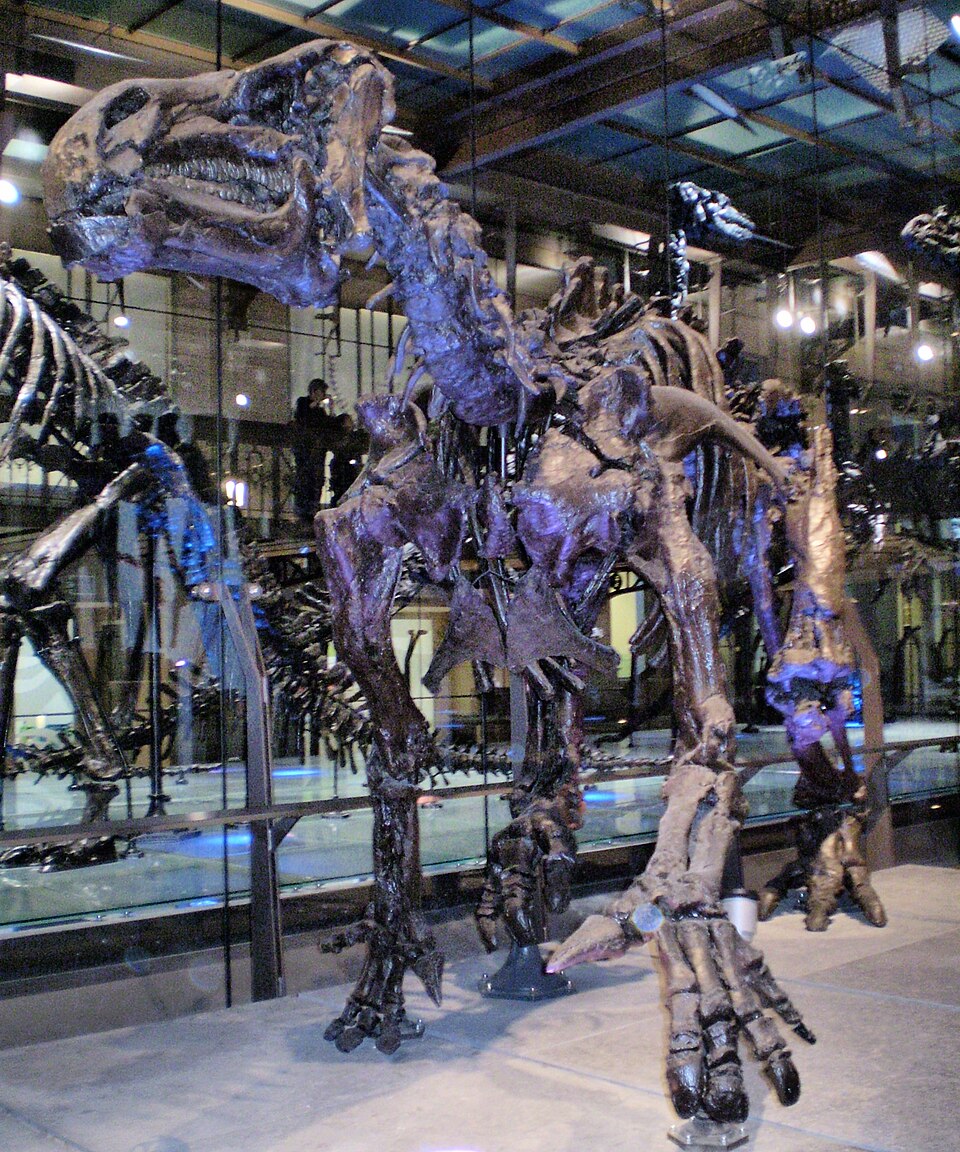
Iguanodon
A thumb spike and reconstruction history reveal how herbivorous dinosaurs are studied. Iguanodon is an ornithopod important in early dinosaur research, with older reconstructions subsequently revised.
Read the guide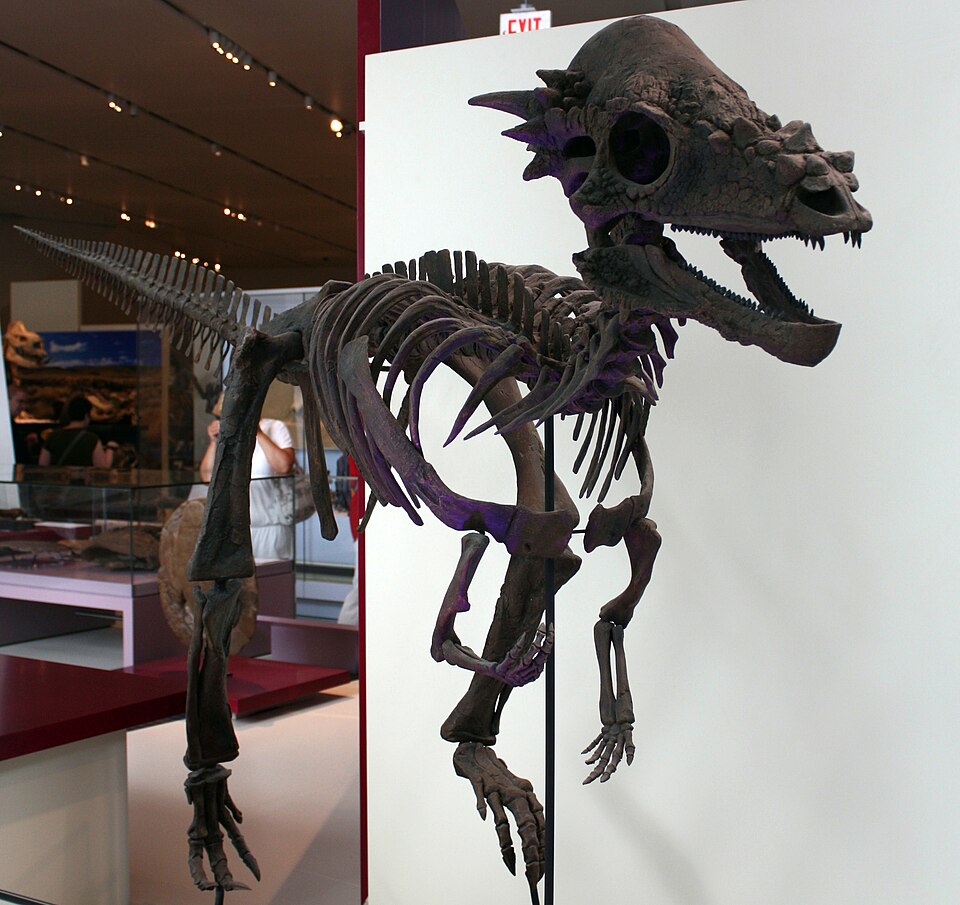
Pachycephalosaurus
Studying the function and growth of a thick-skulled dinosaur. Pachycephalosaurus was an ornithischian with a thick skull, rather than a long-necked sauropod.
Read the guide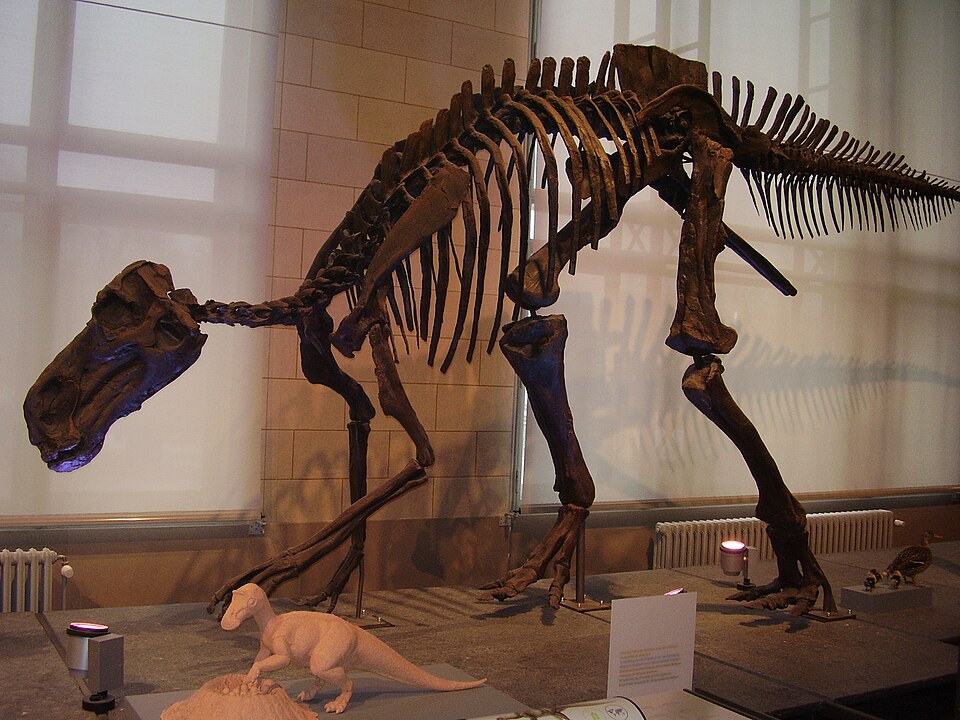
Maiasaura
Nests and fossils of different growth stages provide clues to reproduction. Maiasaura is a hadrosaur known from nests and young individuals, with a name related to interpretations of breeding behaviour.
Read the guide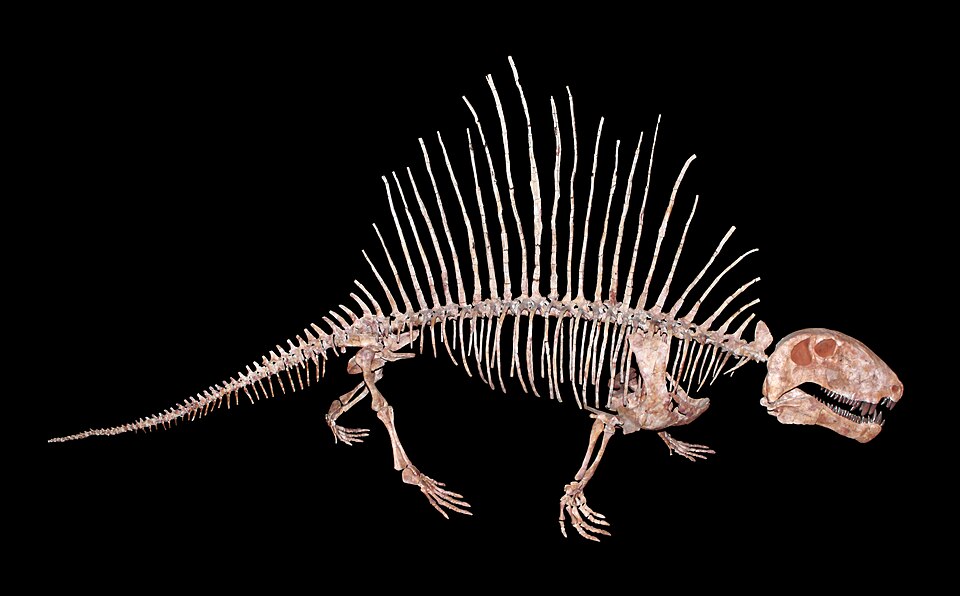
Dimetrodon
A pre-dinosaur synapsid should not be grouped with Spinosaurus merely for its sail. Dimetrodon lived in the Permian and was a distant relative within the broader mammal lineage, rather than a dinosaur or pterosaur.
Read the guide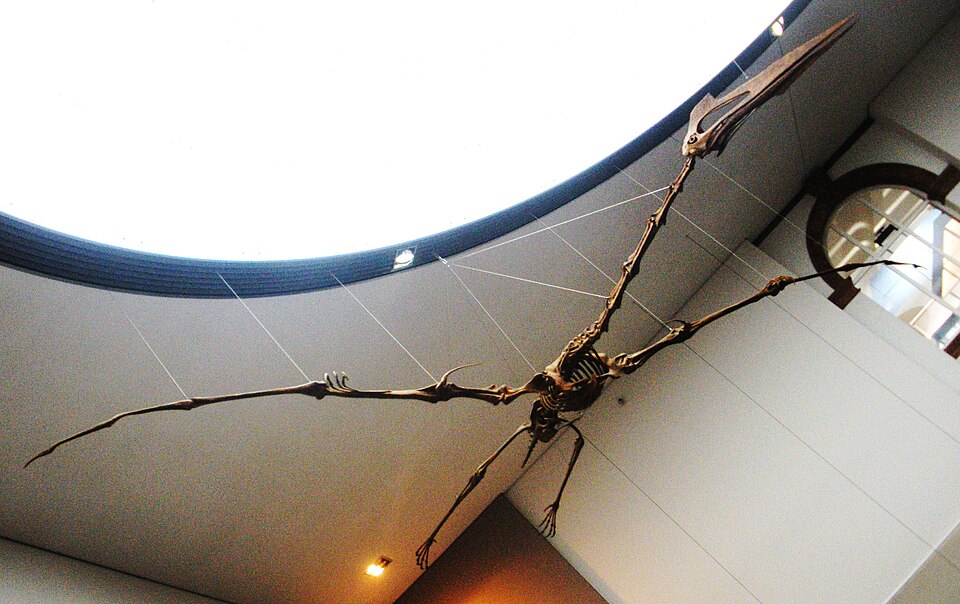
Quetzalcoatlus
A giant azhdarchid pterosaur with a long neck and bill. Quetzalcoatlus is known as a large flying animal, rather than a sauropod dinosaur.
Read the guide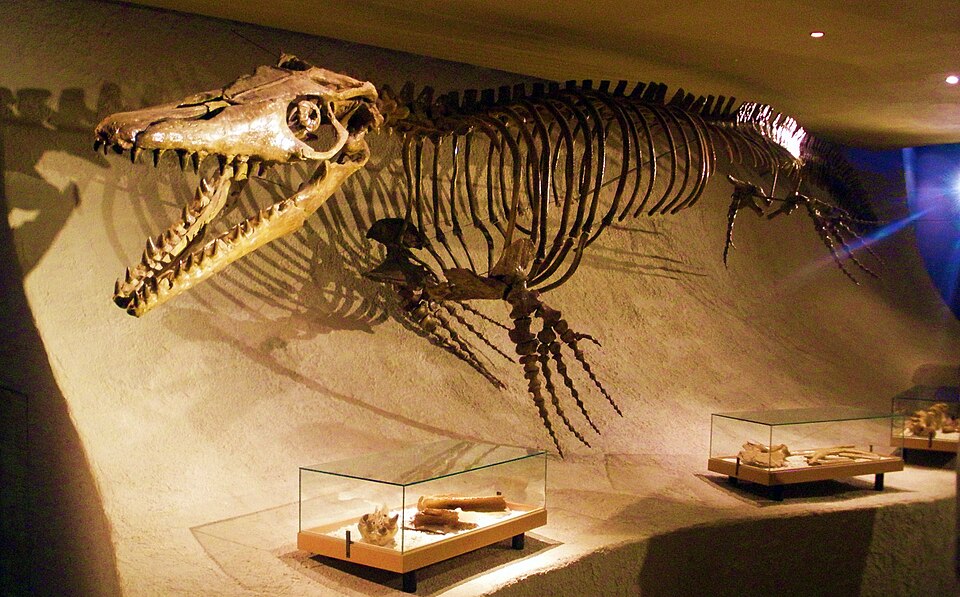
Mosasaurus
Reading jaws and flippers in fossils of a marine reptile rather than a dinosaur. Mosasaurus belonged to sea-adapted mosasaur reptiles, distinct from dinosaurs and modern whales.
Read the guide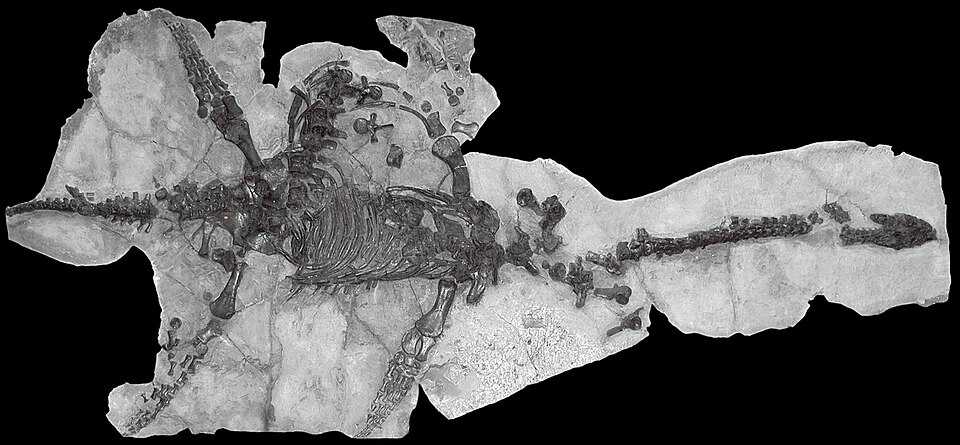
Plesiosaurus
A long neck and four flippers: distinguishing a genus from all plesiosaurs. Plesiosaurus is a genus of marine reptiles, narrower than the entire plesiosaur group.
Read the guide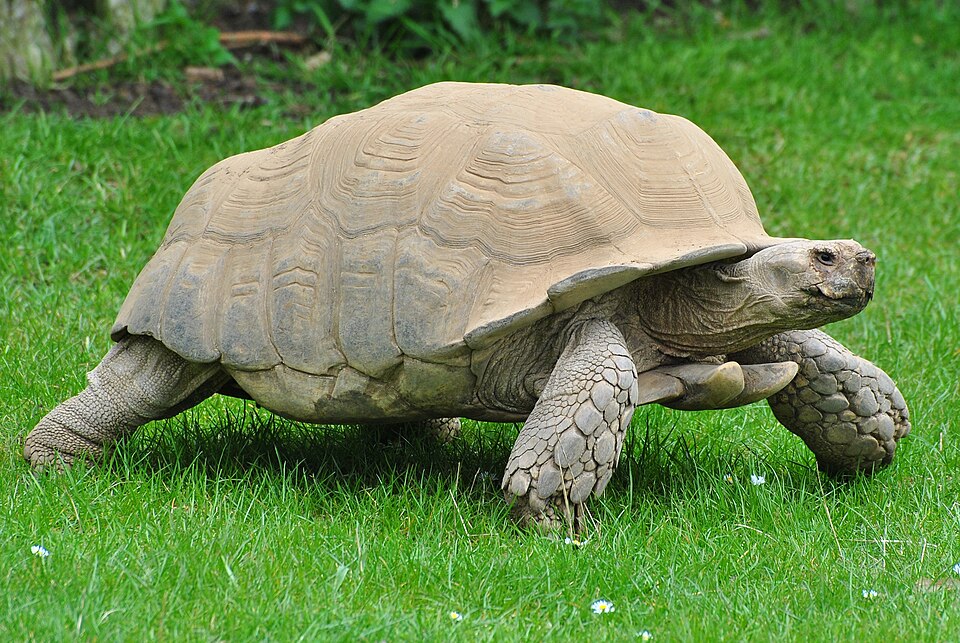
Tortoise
Distinguishing all tortoises from the ecology of one sulcata species. Tortoise covers various turtles adapted to land; this page uses Africa's Centrochelys sulcata as its representative.
Read the guide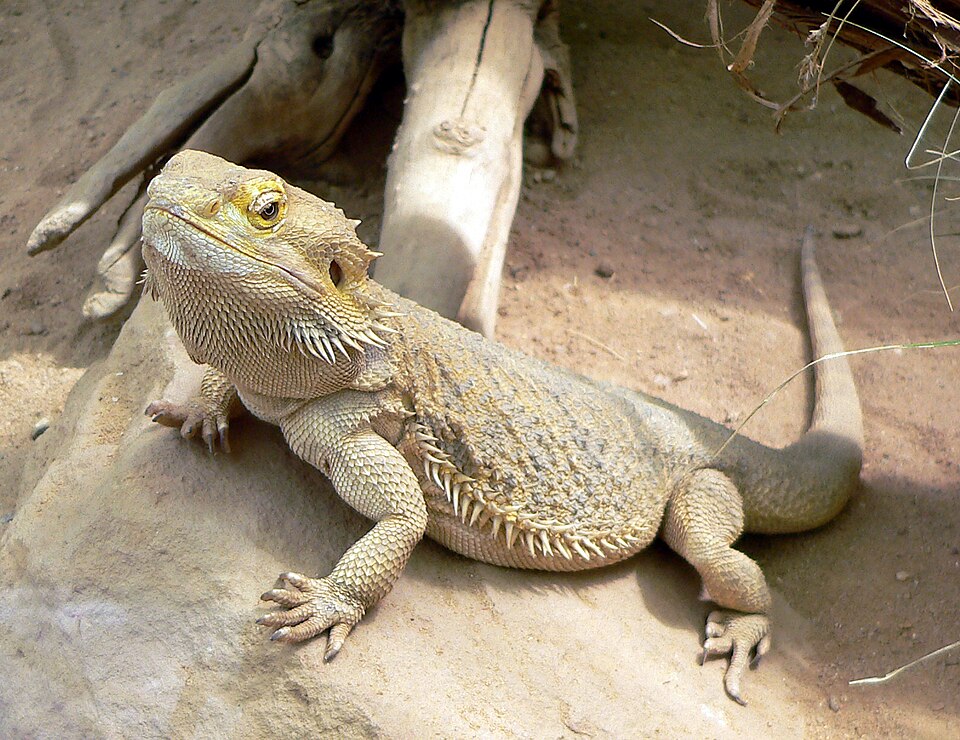
Bearded Dragon
A lizard with beard-like scales and head and foreleg signals. Bearded dragon is a name used for lizards in the genus Pogona; here it means the central bearded dragon, Pogona vitticeps. It lives in dry woodland, scrub and grassland in inland Australia.
Read the guide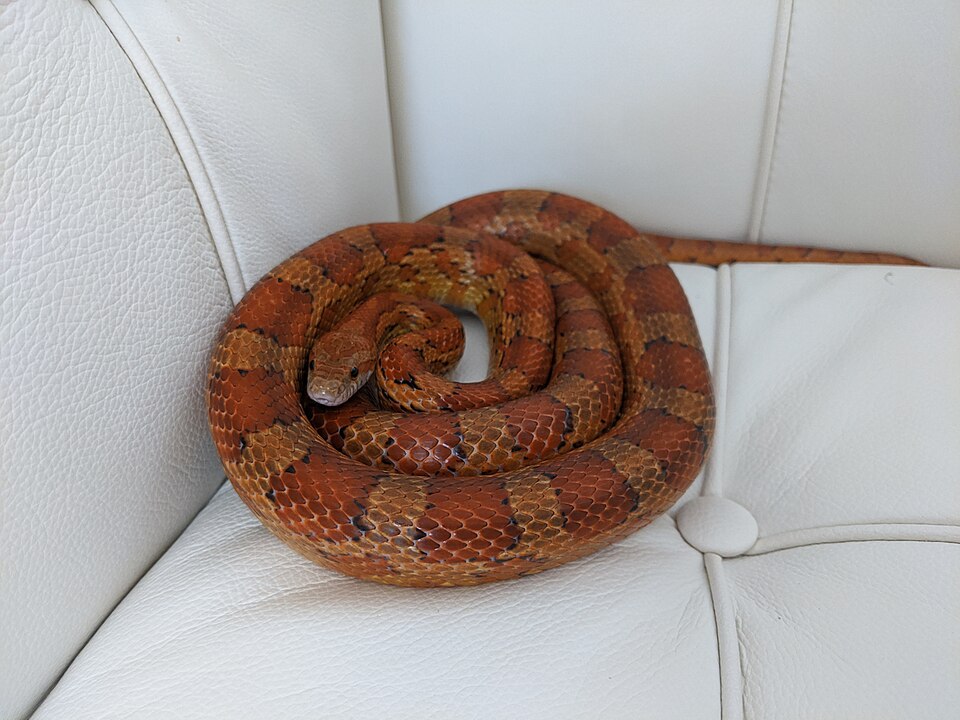
Corn Snake
Consider the checkered belly alongside the ecology of catching rodents. The corn snake is a naturally occurring North American snake species, not a human-created breed like those of dogs or cats. Its current scientific name is Pantherophis guttatus, connected with Elaphe guttata in older material.
Read the guide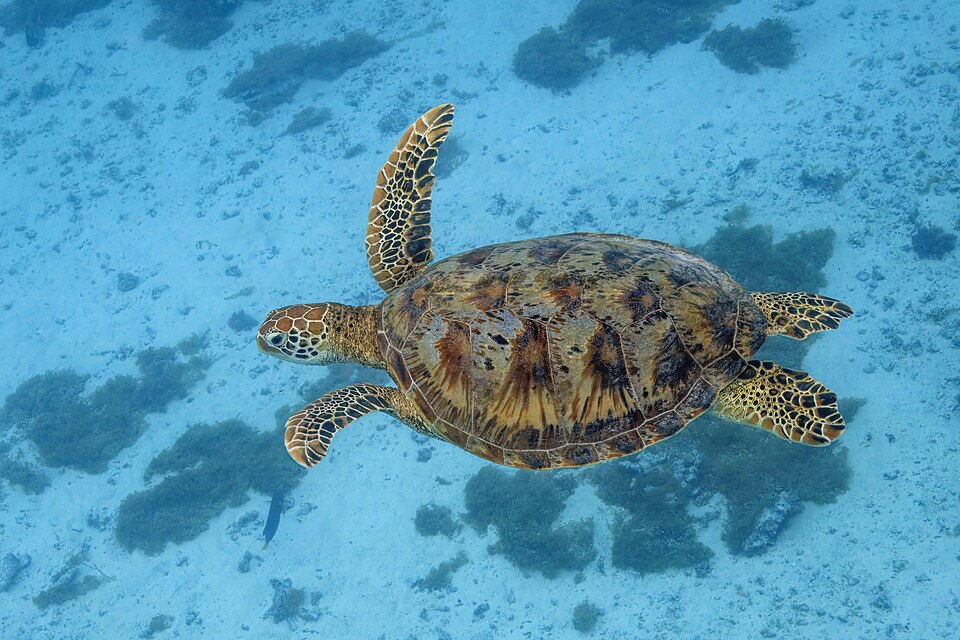
Sea Turtle
Distinguish sea turtles generally from the green turtle's diet. Sea turtle is a name including several species. This page uses the green turtle Chelonia mydas as a representative species, distinguishing it from leatherbacks, hawksbills and others.
Read the guide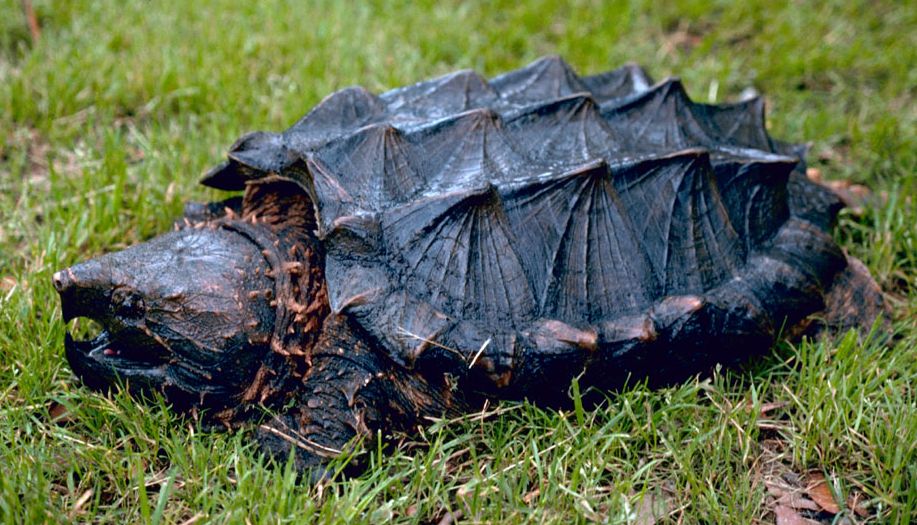
Alligator snapping turtle
An aquatic turtle with a rough shell and a tongue lure. It is a freshwater turtle rather than an alligator; this page focuses on Macrochelys temminckii and distinguishes related Macrochelys species.
Read the guide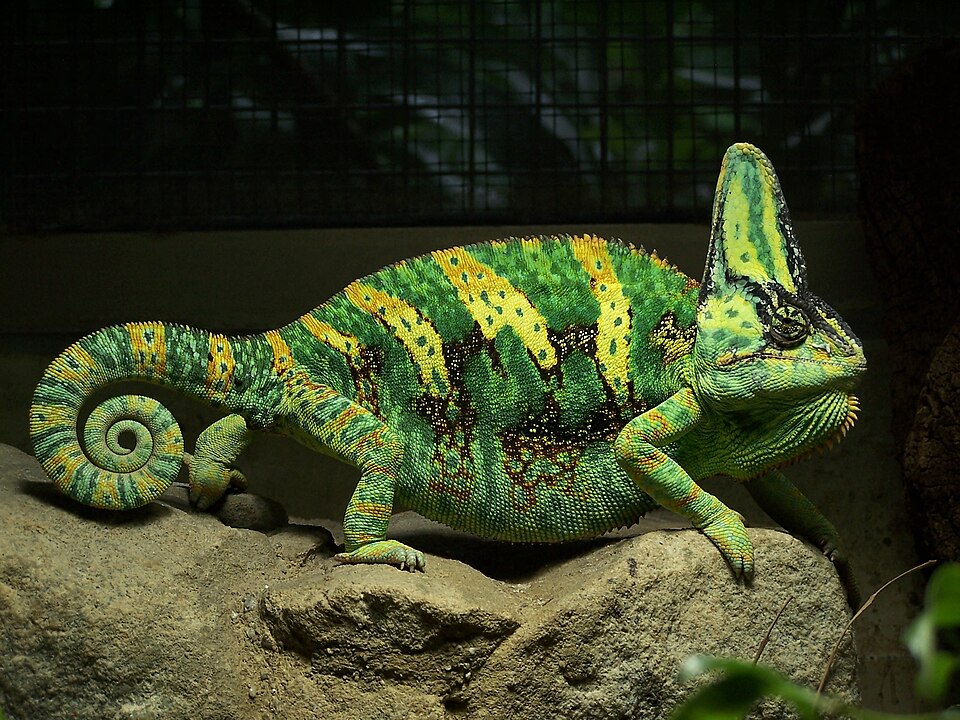
Chameleon
Chameleon color change means more than copying background colors. Chameleon is a name including several species. Here the veiled chameleon Chamaeleo calyptratus, also called the Yemen chameleon, is used as the representative species.
Read the guide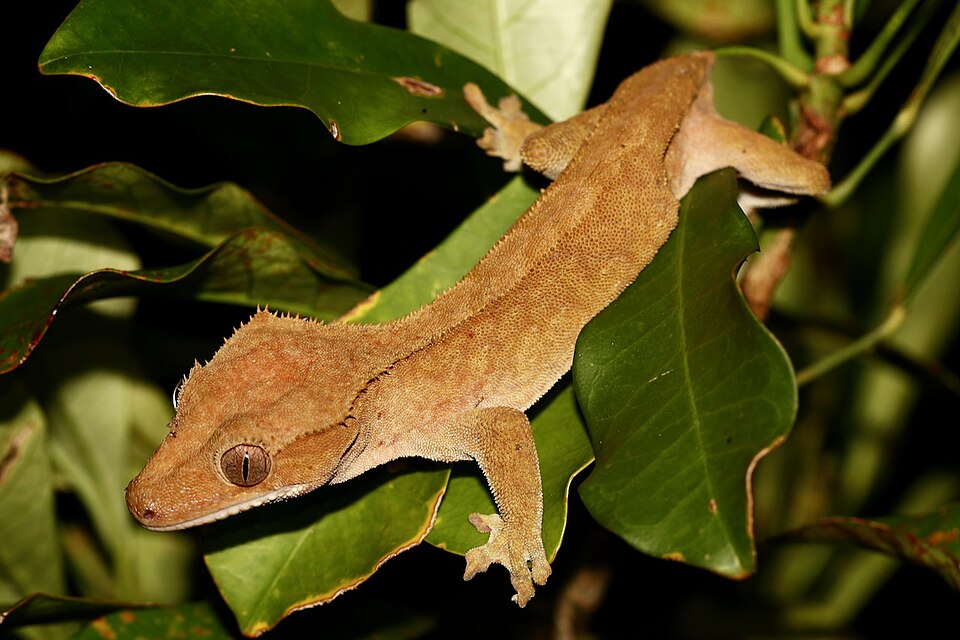
Crested gecko
Raised eye crests, branch-gripping feet and adults that may lack a tail. The New Caledonian gecko Correlophus ciliatus connects with the older name Rhacodactylus ciliatus.
Read the guide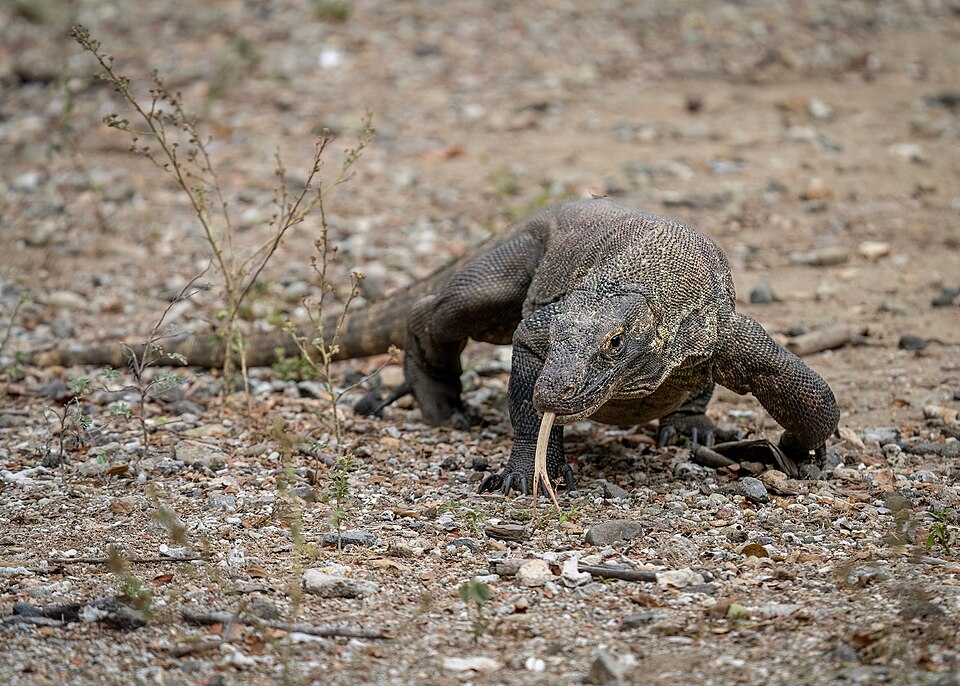
Komodo dragon
Scent exploration and island ecosystems of a giant monitor lizard. The living lizard Varanus komodoensis naturally occurs on a limited set of Indonesian islands; a living-dinosaur nickname does not make it a dinosaur.
Read the guide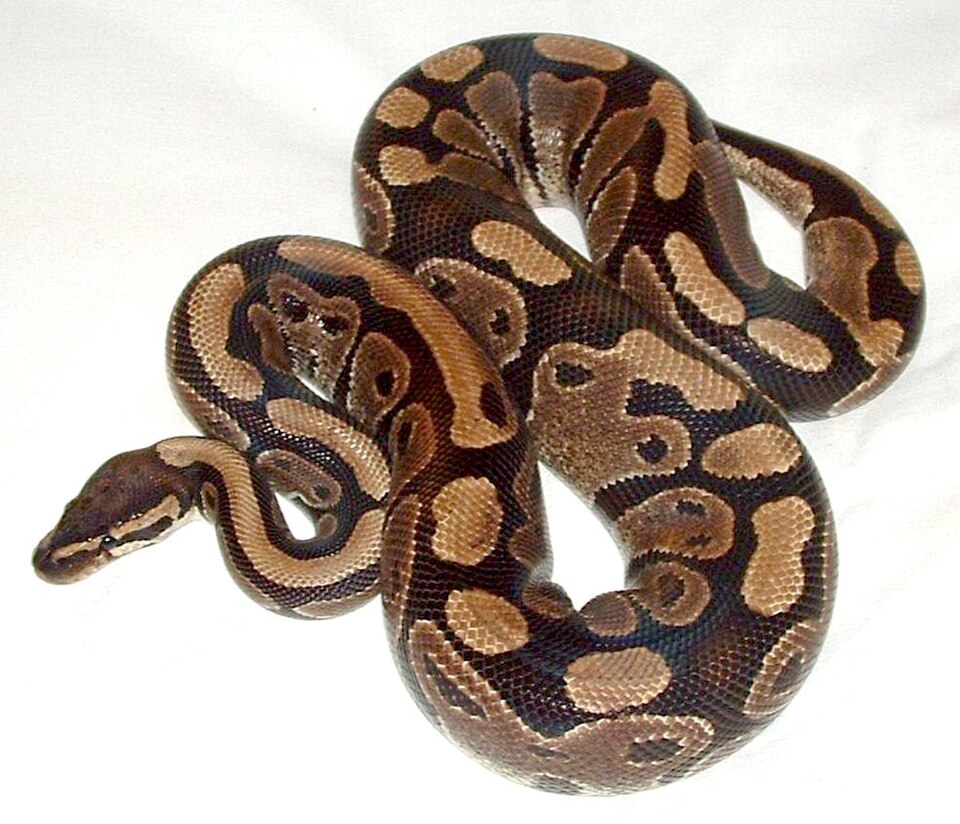
Ball python
A python coils defensively with its head protected inside. The African species Python regius takes its ball name from curling up to protect the head when threatened.
Read the guide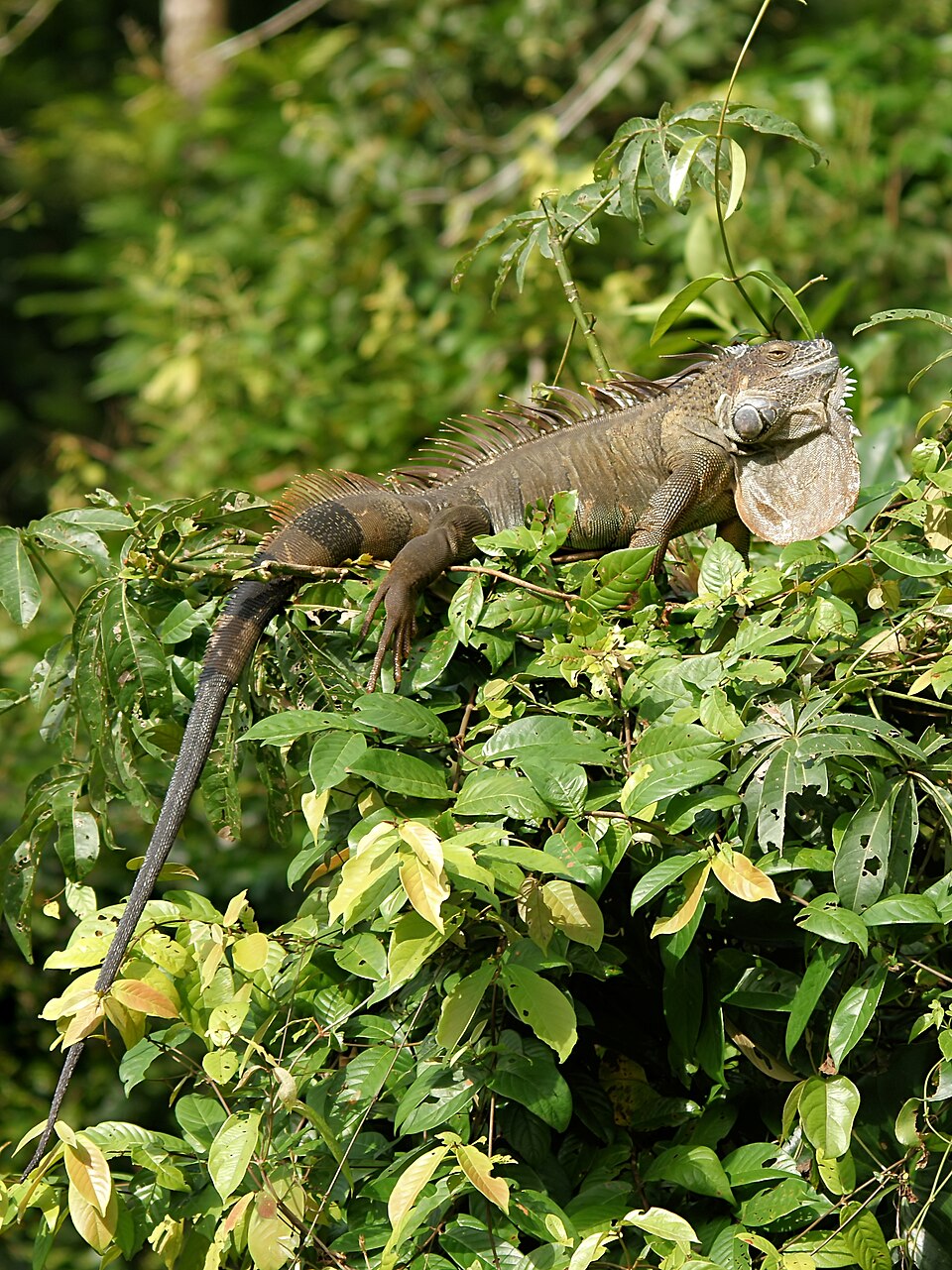
Green iguana
A long-tailed lizard with a dewlap uses trees and water together. The green iguana belongs to tropical American iguanas; it is a scaled lizard rather than a turtle.
Read the guide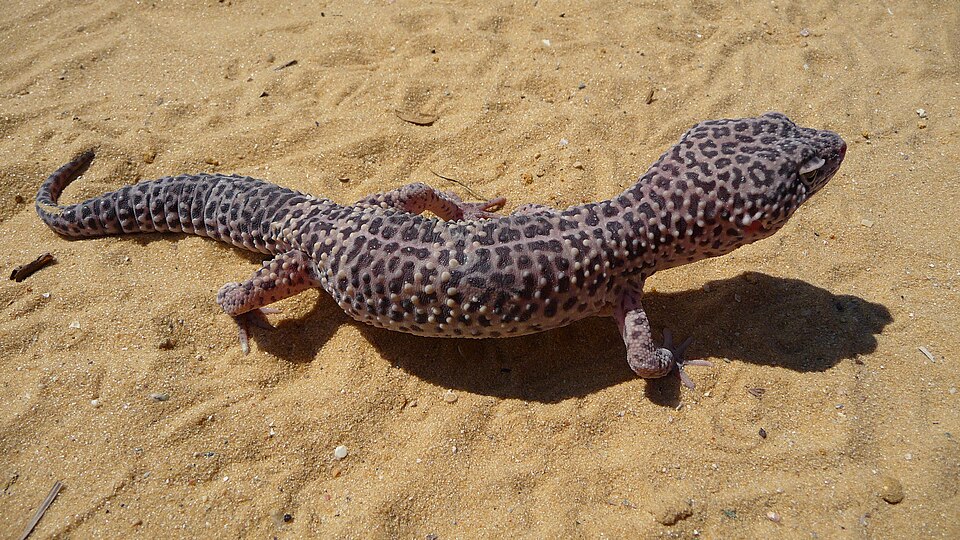
Leopard gecko
A ground-dwelling gecko with movable eyelids and a fat-storing tail. Leopard geckos should not be generalised as climbing smooth glass readily like some other geckos.
Read the guide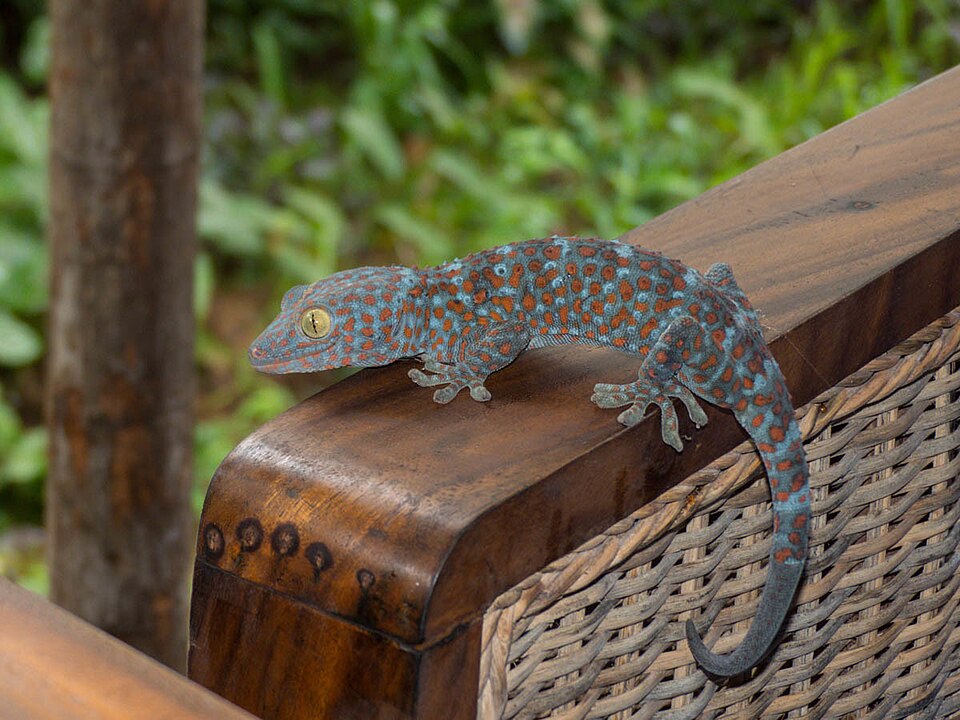
Tokay gecko
A nocturnal gecko with loud calls and adhesive toe structures. The tokay is a large Southeast Asian gecko, a limbed lizard rather than a snake.
Read the guide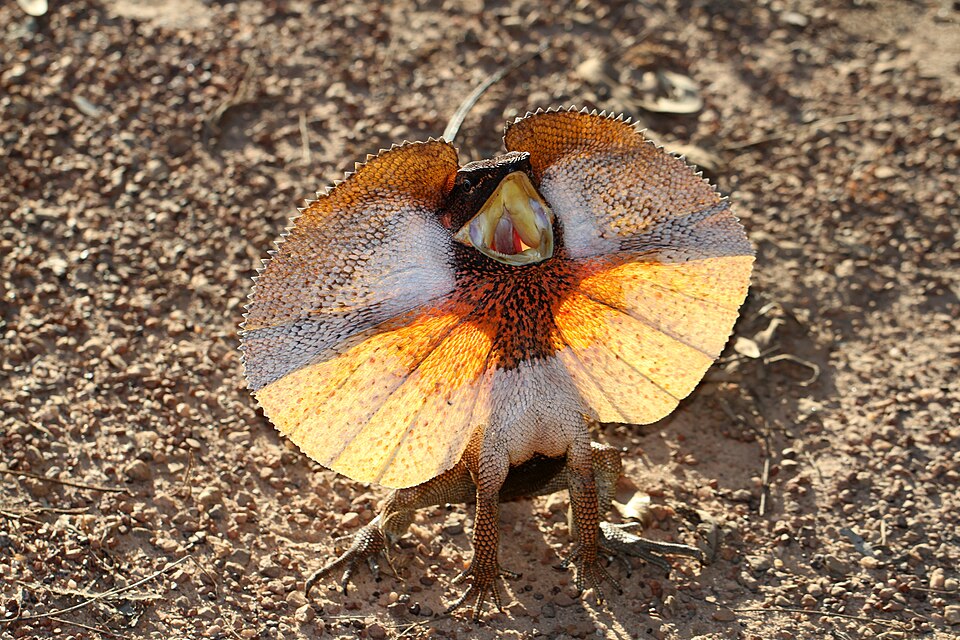
Frilled lizard
An Australian lizard's folded frill belongs alongside its life in trees. This tree-using agamid lizard is named for an expanding skin structure around the neck.
Read the guide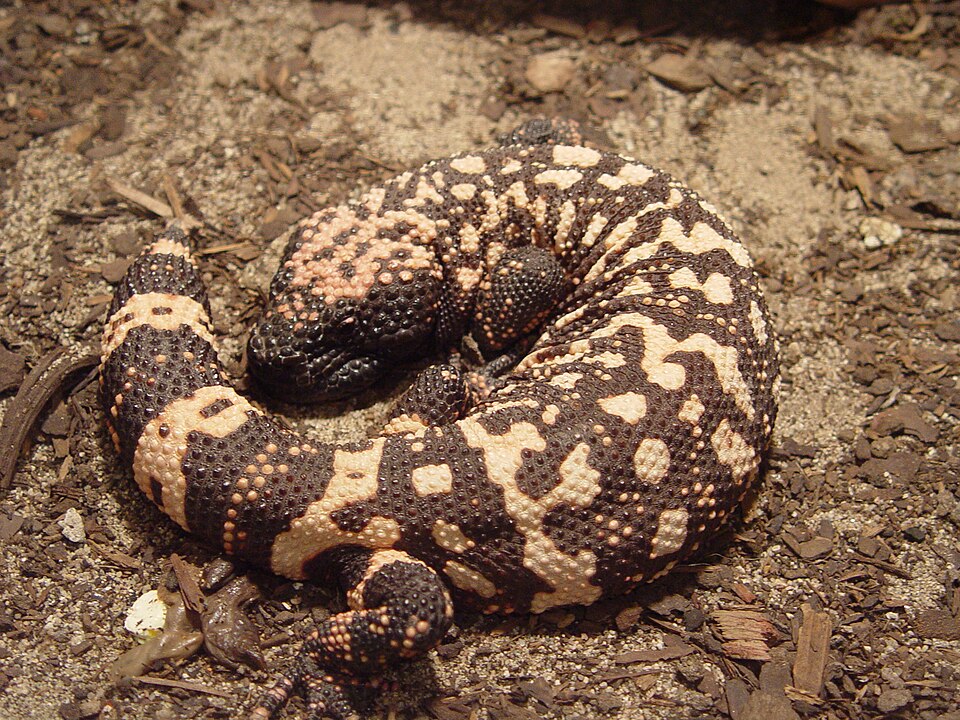
Gila monster
A venomous lizard spends much of its time in burrows and shelter. Gila monsters inhabit dry regions of the southwestern United States and Mexico.
Read the guide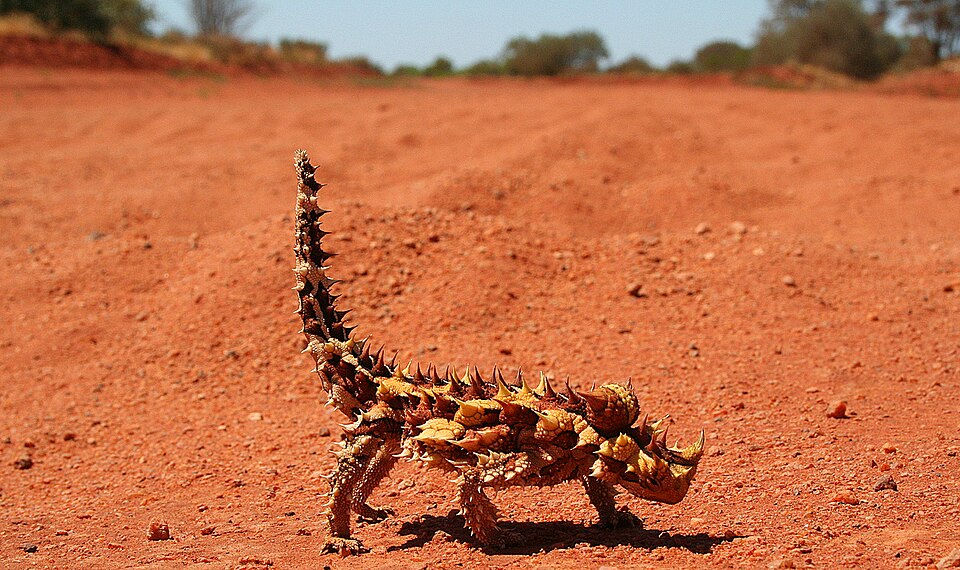
Thorny devil
An ant specialist with unusual water-transport structures in its skin. The thorny devil is an Australian dryland lizard; the snake element in its Korean name does not place it in a snake lineage.
Read the guide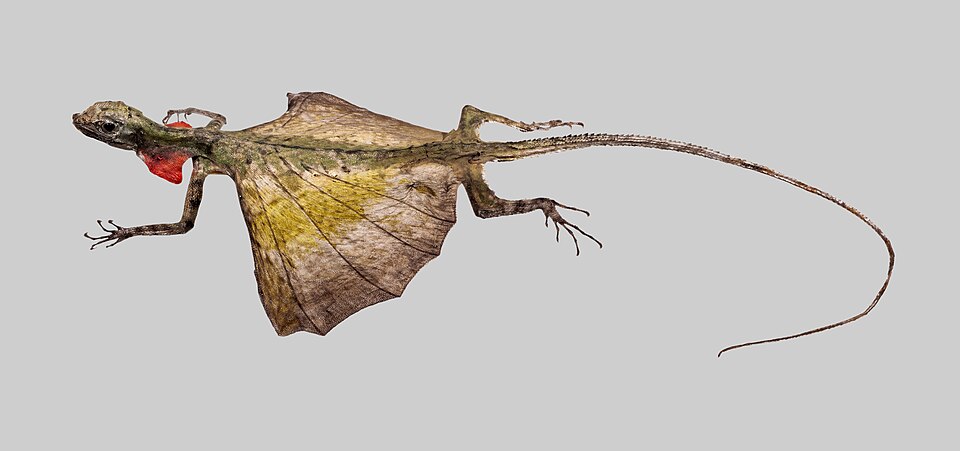
Flying dragon
Rib-supported skin membranes allow gliding between trees. Flying dragons are gliding lizards of Draco; this page covers Draco volans, distinct from birds using powered wingbeats.
Read the guide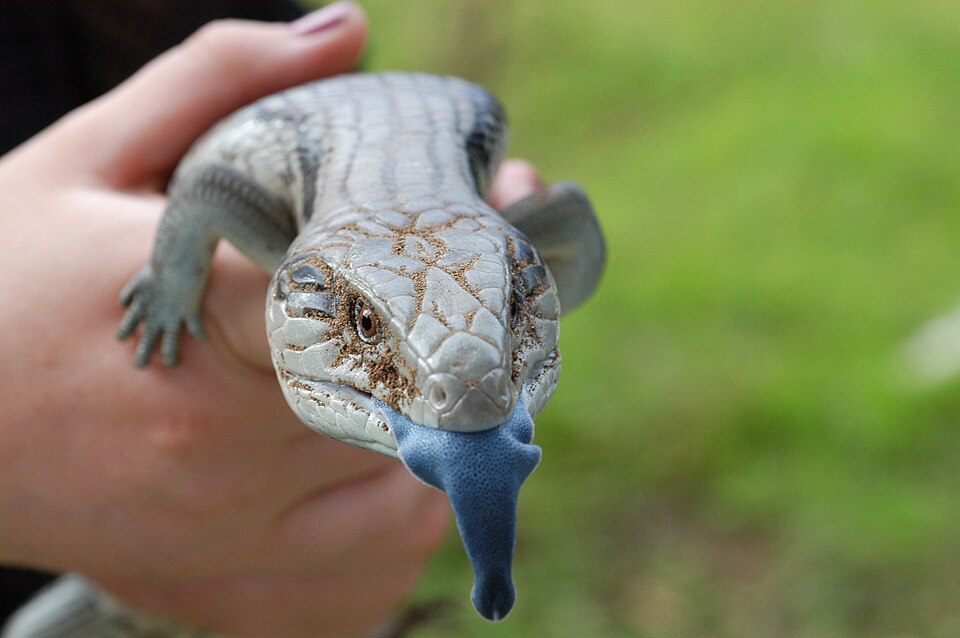
Blue-tongued skink
A ground-dwelling lizard with short legs, a thick body and a blue tongue. Blue-tongued skink is used for several Tiliqua species; this page focuses on Tiliqua scincoides.
Read the guide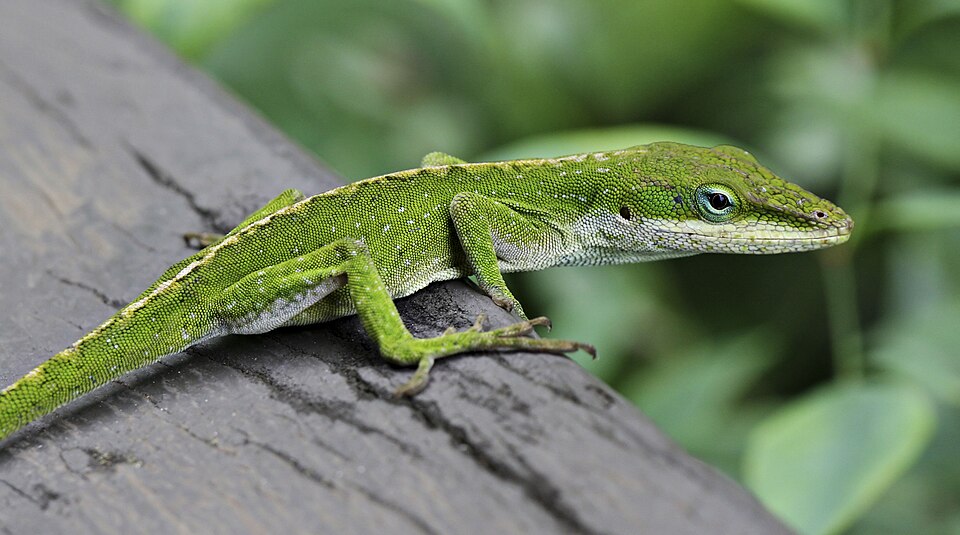
Green anole
Reading green-to-brown colour changes together with dewlap signals. The green anole is a small North American lizard; changing colour does not place it in the chameleon lineage.
Read the guide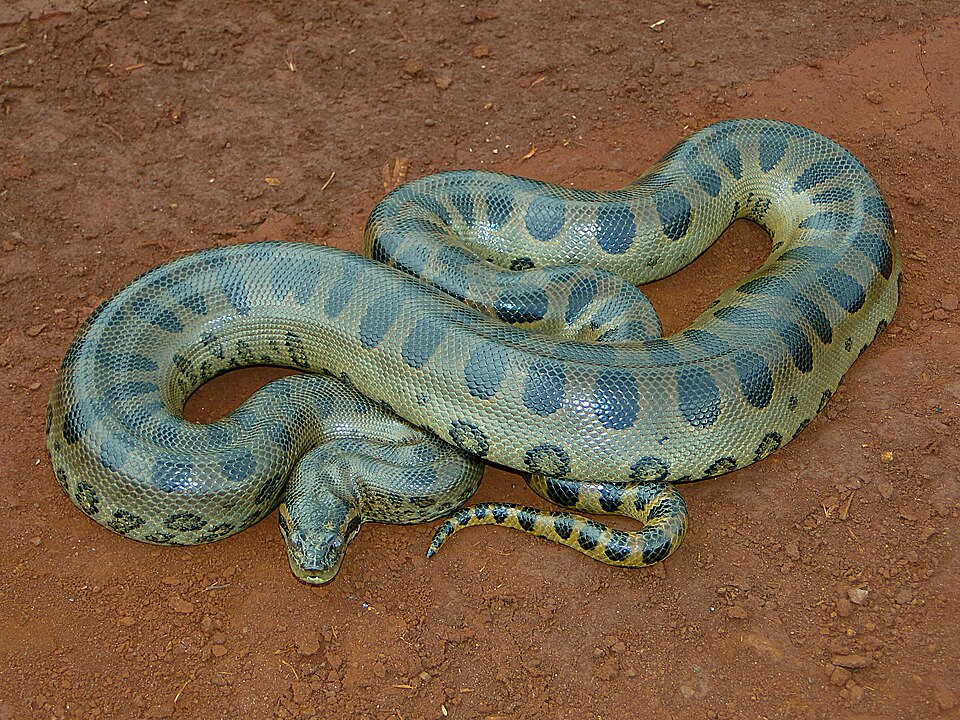
Green anaconda
A waterside boa: distinguish large females from general size records. Green anacondas are adapted to life near water; recent species-delimitation research involves debate, so check scientific names and studied populations.
Read the guide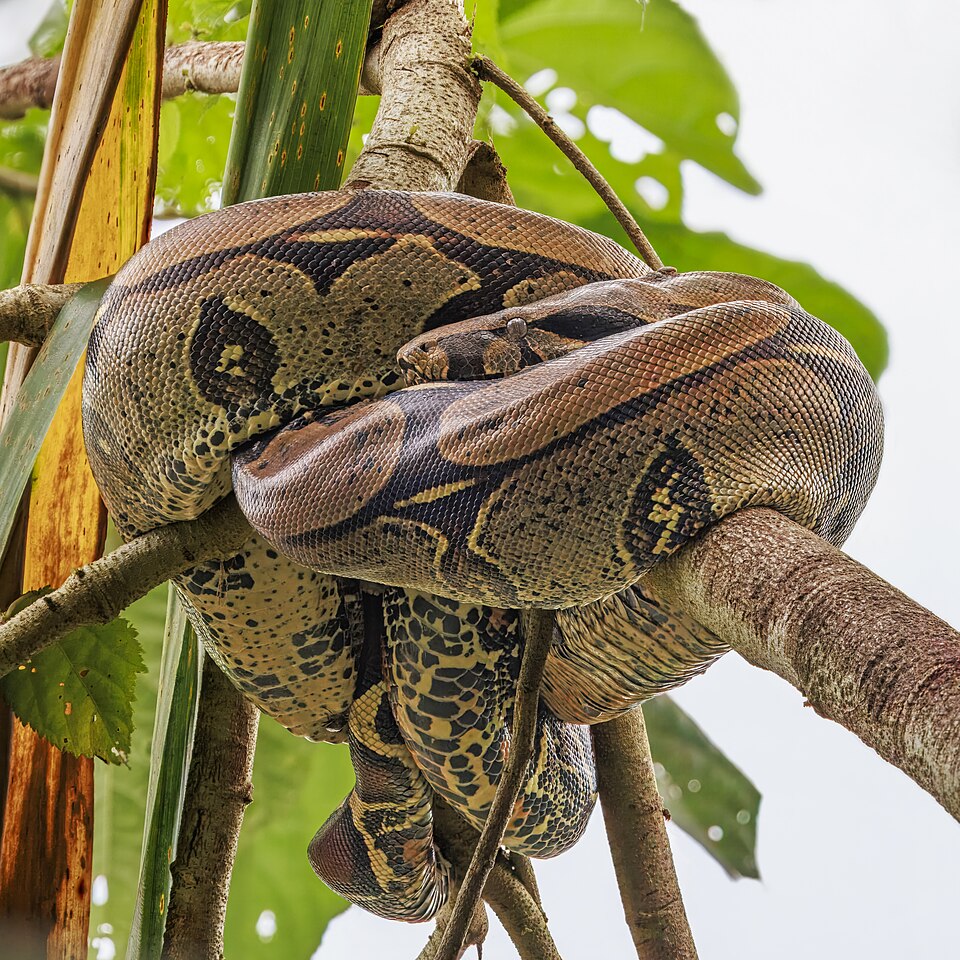
Boa constrictor
Saddle-like markings and constriction: distinguishing related boas. Boa constrictor belongs to the boa family; taxonomic work distinguishing regional lineages and related species means sources with one name cannot simply be combined.
Read the guide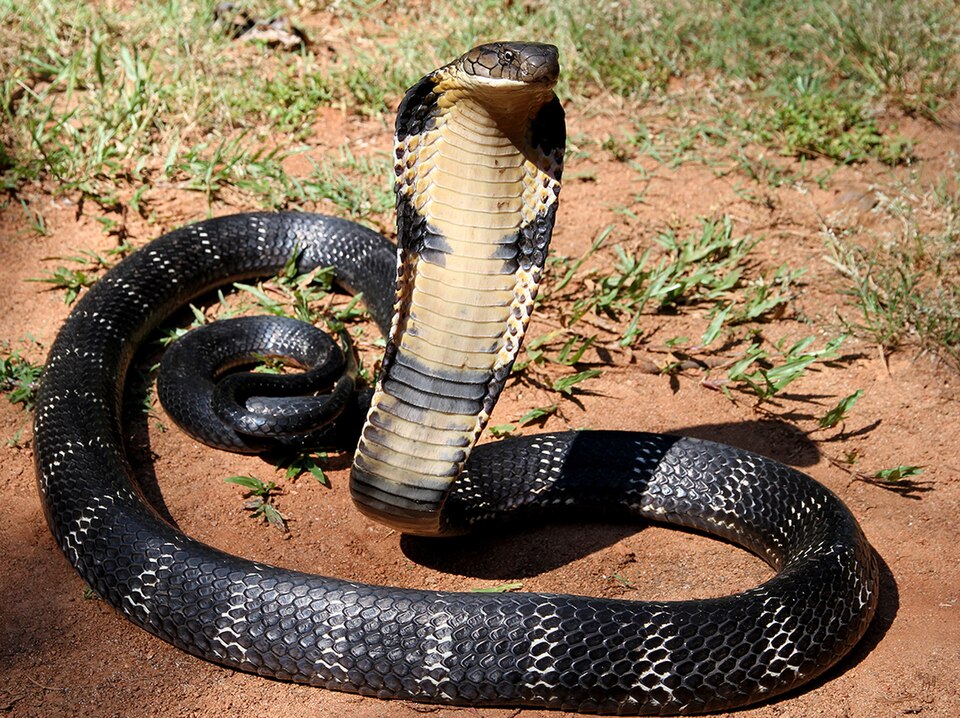
King cobra
Snake feeding and the hood are explained alongside the king cobra group now divided into several species. Distinguish historical scientific labels from present species boundaries.
Read the guide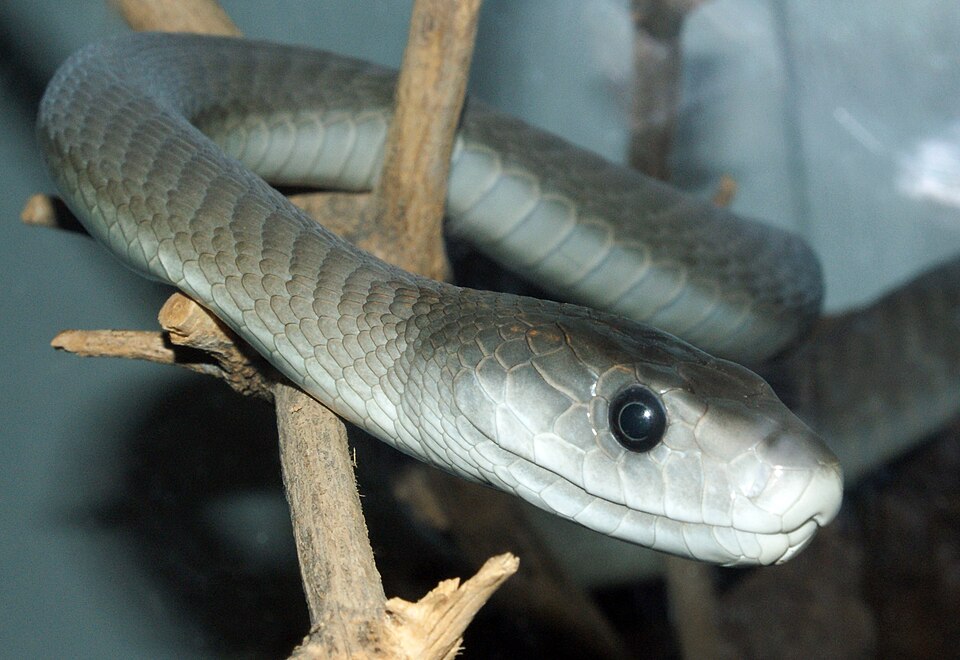
Black mamba
A dark mouth and grey-brown body: observe behaviour beyond a fearful nickname. The black in this African venomous snake's name generally refers to the mouth interior, rather than a body that is always entirely black.
Read the guide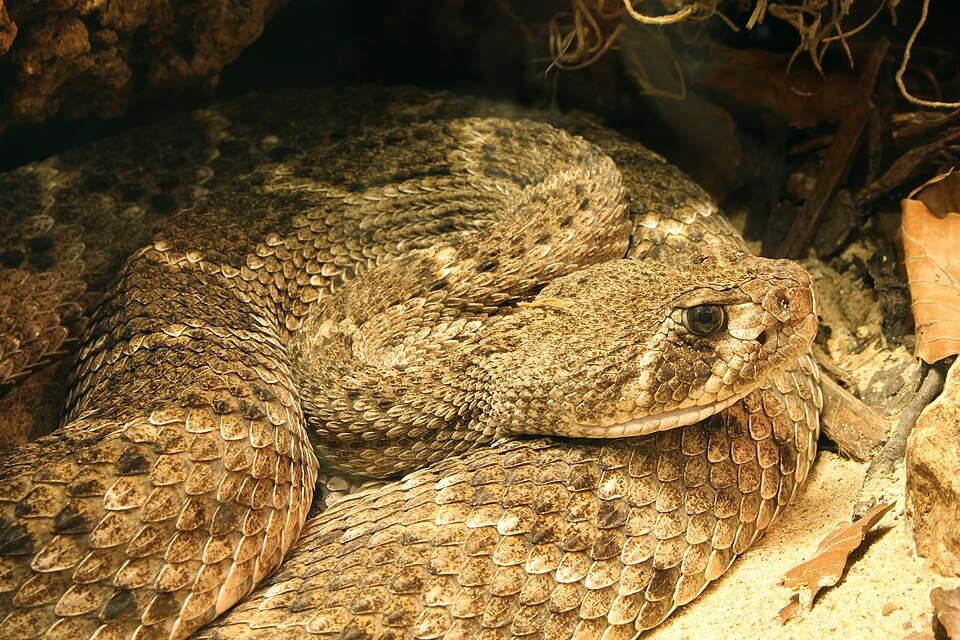
Rattlesnake
Diamond patterns and a tail rattle do not reveal age by segment count. There are several rattlesnake species; this page describes the western diamondback rather than assigning identical venom and ranges to all.
Read the guide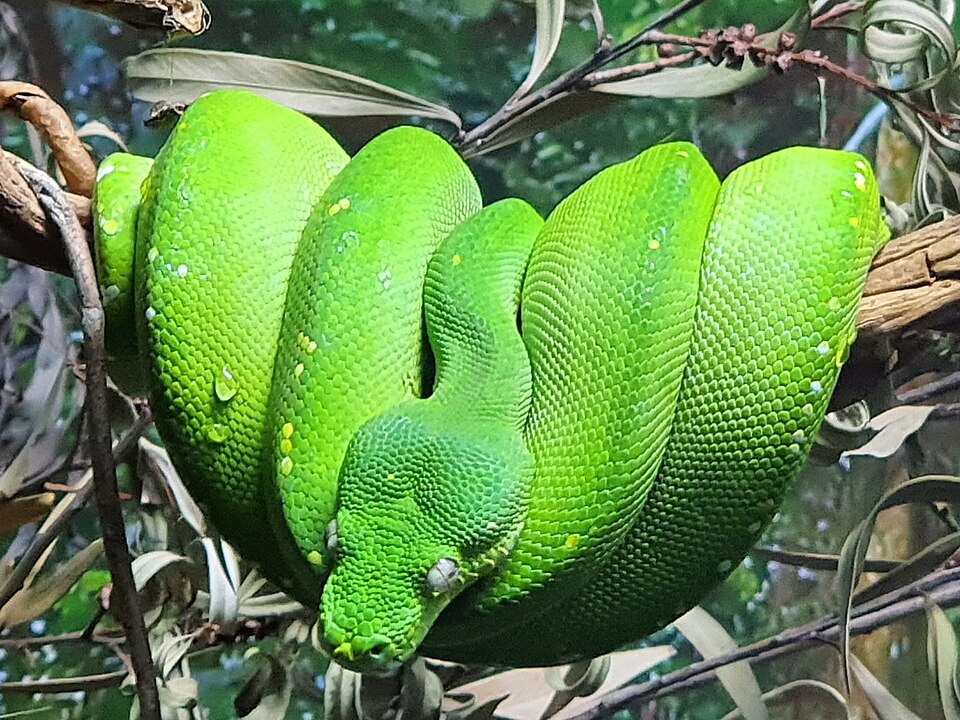
Green tree python
A python known for draping its body over branches and changing color as it grows. The green tree python uses trees. When discussing the classification of regional populations, distinguish it from closely related species.
Read the guide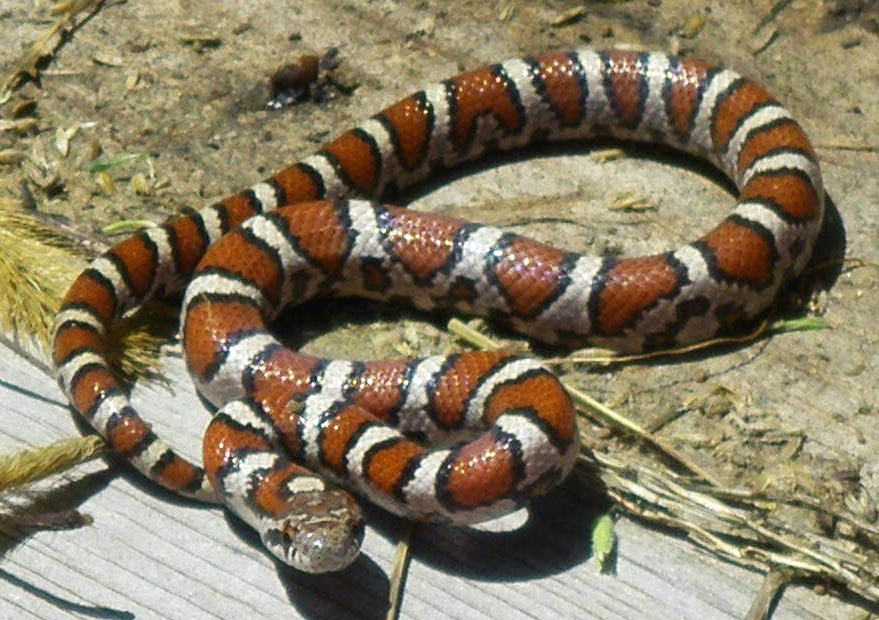
Milk snake
North American milk snake markings and a misleading name. Milk snake covers several related kingsnake groups; the former broad Lampropeltis triangulum has been subdivided, making locality and scientific name important.
Read the guide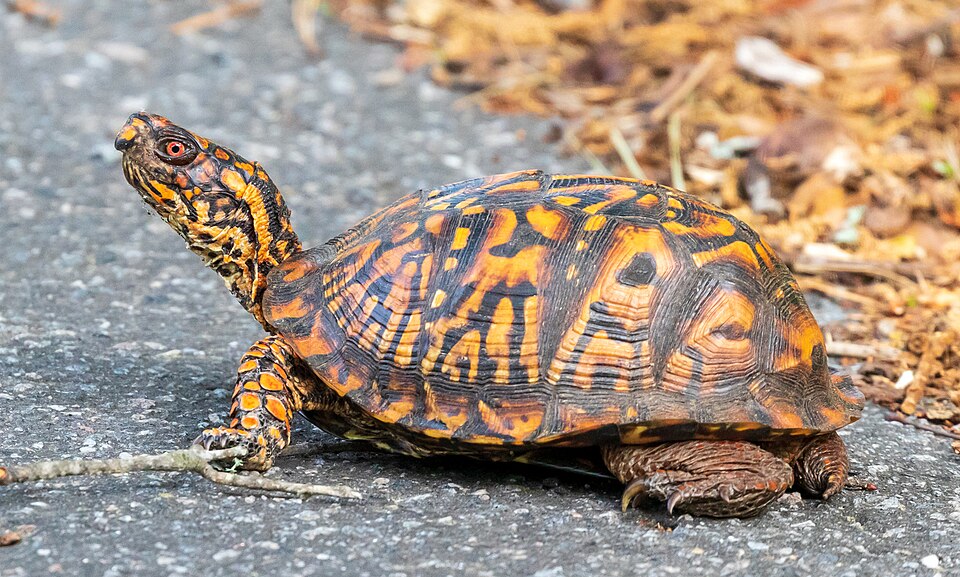
Box turtle
A hinged plastron and life on the forest floor. There are several box turtle species; this entry describes Terrapene carolina and distinguishes mainly terrestrial conditions from those of aquatic turtles.
Read the guide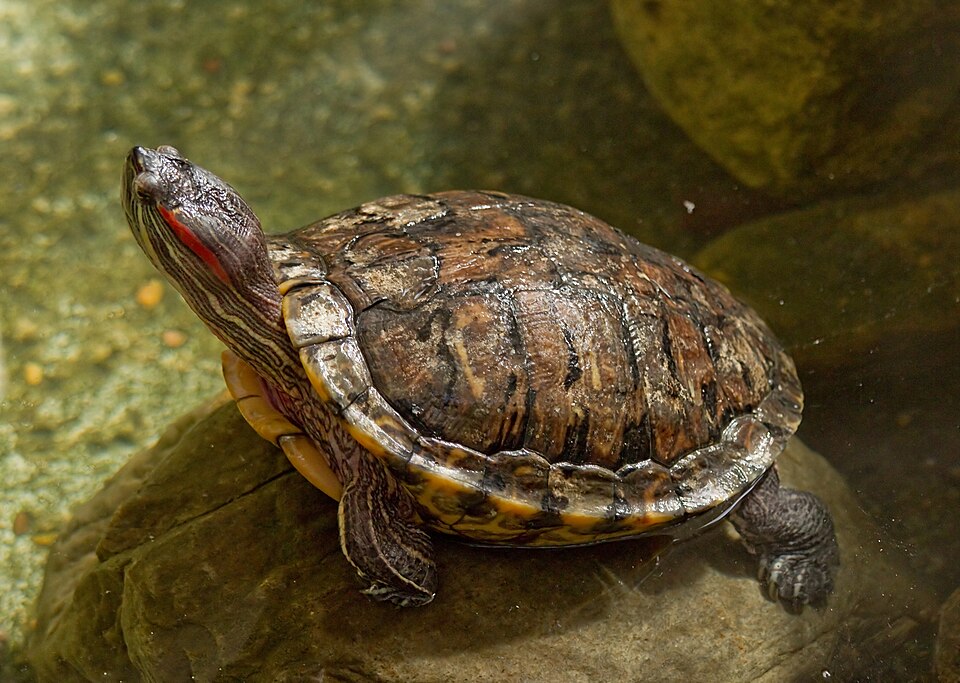
Red-eared slider
Red markings behind the eyes, basking and introduced-population ecology. The red-eared slider is a subspecies of Trachemys scripta spread beyond its original range through international keeping and transport.
Read the guide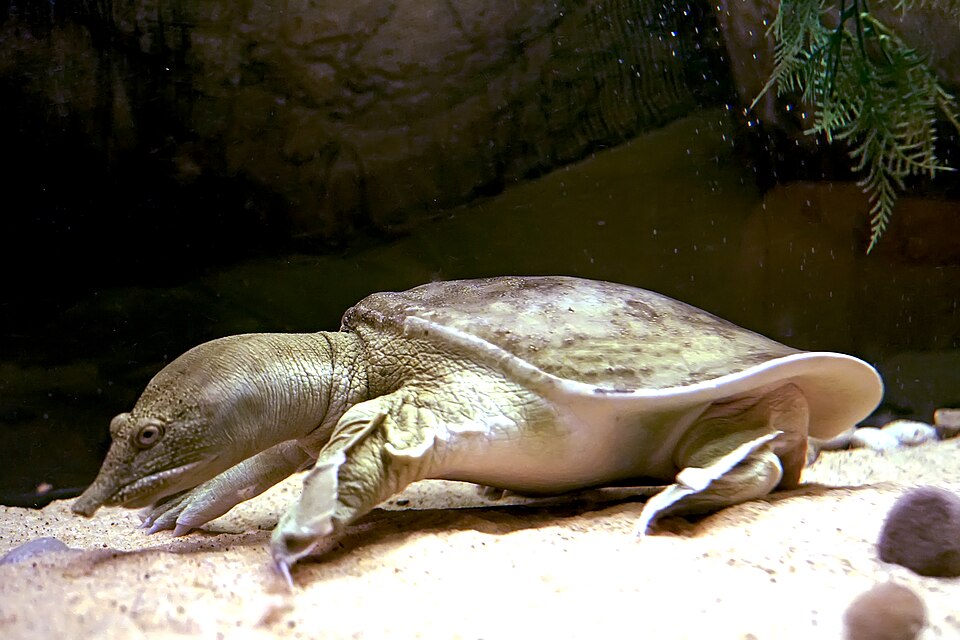
Softshell turtle
A flat soft-edged shell and long nose: check the actual softshell species. This page focuses on Pelodiscus sinensis, distinguishing related regional species.
Read the guide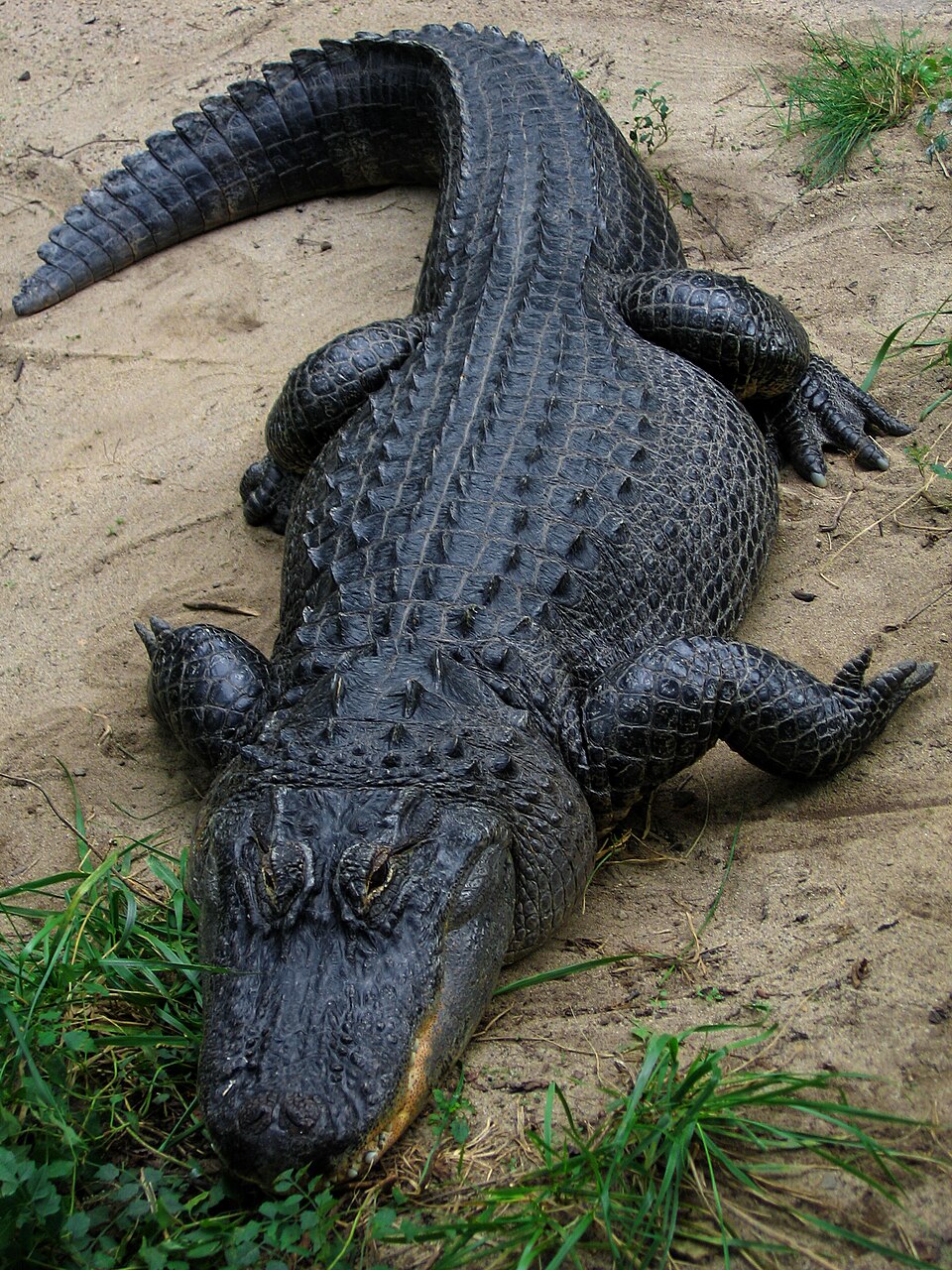
American alligator
A broad-snouted alligator of southeastern wetlands protects nests and young. The American alligator belongs to Alligatoridae within Crocodilia, a lineage distinct from Crocodylus species such as the Nile crocodile.
Read the guide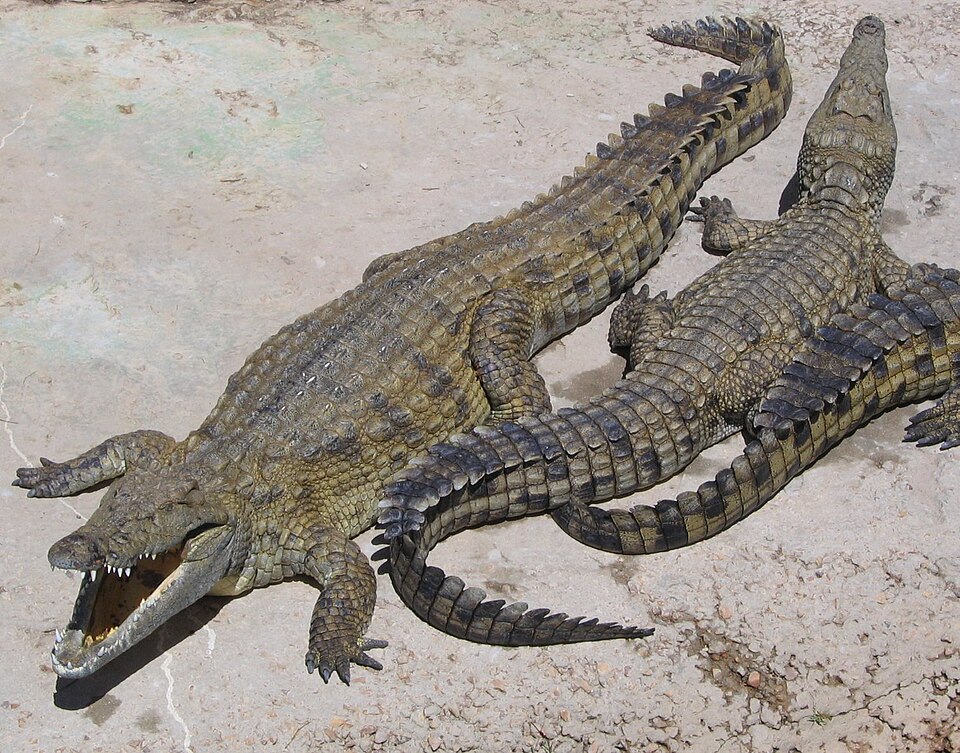
Nile crocodile
A crocodile moves between water and land, distinct from the West African crocodile. Nile crocodiles belong to Crocodylidae; keep classification and distribution separate from the similarly named West African species.
Read the guide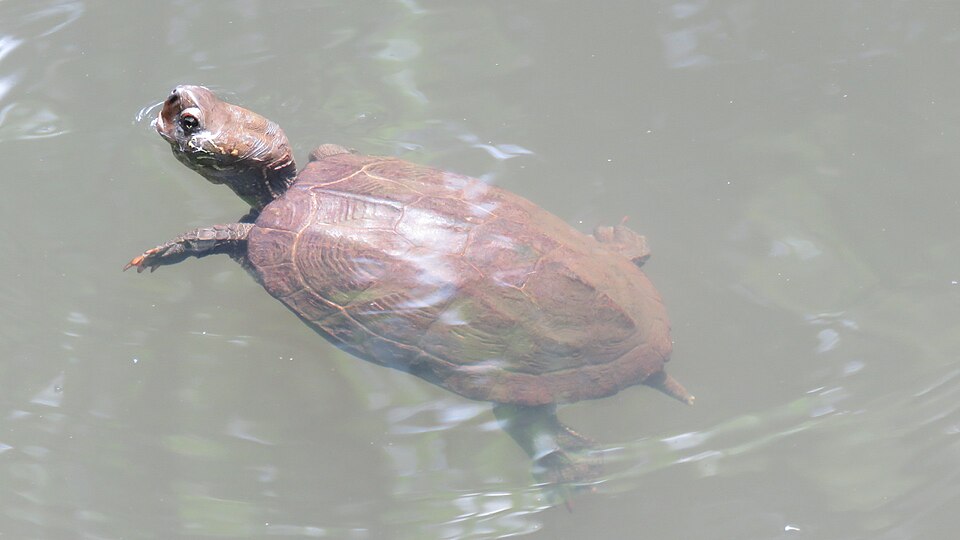
Reeves’s turtle
Follow the three ridges on the shell and the lines behind the eye. The journey from feeding in water to nesting on a grassy bank shows how much of the shoreline this turtle uses.
Read the guide